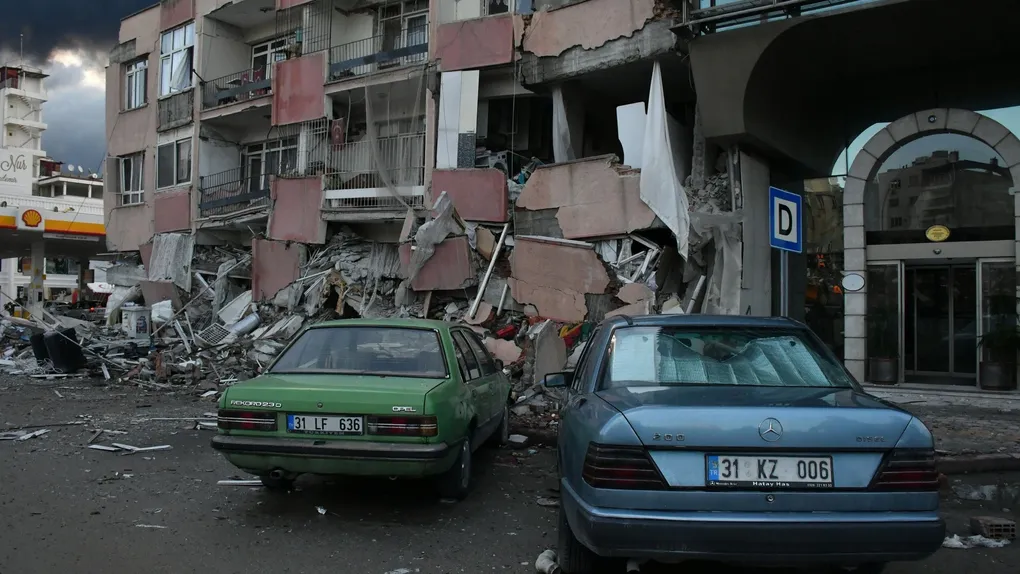
Prepping for an earthquake: Master drop, cover, and hold on
The couple in the Northridge house did everything people imagine you should do during an earthquake: they ran for the front door. The house survived fine. What put them in the emergency room was the china cabinet they never anchored, which crossed the hallway ahead of them. Of all natural disasters, earthquakes are perhaps the most psychologically terrifying because they arrive with zero warning. There is no weather forecast, no radar track, and no countdown clock. In a split second, the solid ground beneath you becomes a violent, moving force.
The difference between a frightening experience and a tragedy often depends on the preparations you make before the shaking starts and your reflex actions the moment it begins. Earthquake preparedness is unique because it is primarily about engineering and instant reaction. Unlike a hurricane where you might have days to board up windows, an earthquake requires your home to already be secured. Bookshelves must be anchored, foundations must be bolted, and your family must know exactly what to do without thinking.
This guide walks the complete protocol: securing your space, the 10-second reflex drill, the under-bed kit, the utility kill switches, the structural anchor points, and the aftermath. You will move from hoping the house holds to knowing it will.
Disclaimer: The information provided in this article is for general informational and educational purposes only. It is not intended as, and should not be considered, legal, medical, or architectural advice. Building codes and seismic risks vary significantly by region. Always consult with structural engineers and local emergency officials for specific guidance regarding your property.
The Key Takeaways
For those short on time, here are the most important things to know:
- Drop, Cover, and Hold On: This is the only internationally recognized survival protocol. Do not run outside. Do not stand in a doorway. Get under a sturdy table and hold on.
- The “Under-Bed” Rule: Most injuries occur from stepping on broken glass in the dark immediately after the quake. Keep sturdy shoes and a flashlight tied to your bed frame.
- Anchor Everything: Gravity is the enemy. Tall furniture, heavy mirrors, and water heaters become lethal projectiles. Securing them to studs is mandatory, not optional.
- Gas is the Secondary Threat: Fires following earthquakes often cause more destruction than the quake itself. Know how and when to shut off your natural gas.
- Expect Aftershocks: The first quake is rarely the last. Be prepared for secondary shocks that can bring down already-weakened structures hours or days later.
The Six-Part Manual
Part 1: Secure Your Space
The couple who ran for the front door were injured by furniture, not the building. In developed nations with modern building codes, the vast majority of injuries do not come from the roof collapsing, they come from your own stuff attacking you. In a 6.0+ magnitude quake, your 50-inch TV becomes a projectile, your grandmother’s china cabinet becomes a crushing weight, and your water heater becomes a 400-pound bomb that can sever gas lines and flood your home. Non-structural mitigation is a fancy way of saying “bolting things down,” and it is cheap, effective, and entirely within your control.
Read the full guide on Securing Your Home
Part 2: The 10-Second Drill
Earthquakes offer zero countdown. One second you are drinking coffee, the next, the floor is pitching at a 45-degree angle. When the ground moves, the primitive human instinct is to run, and in a modern earthquake, running is statistically the most dangerous action you can take. Survival is not about speed, it is about stability. Execute “Drop, Cover, and Hold On.”
Read the full guide on The 10-Second Drill
Part 3: The Under-Bed Kit
Imagine it is 3:00 AM. A 7.0 magnitude earthquake strikes, plunging your home into absolute darkness. When the shaking stops, your floor is a minefield of jagged glass and debris. If you step out of bed barefoot and slash your foot, you become an immediate casualty, bleeding, immobile, and blind in the dark. Secure three simple items to your bed frame, and when you stand up, you are armored and illuminated.
Read the full guide on The Under-Bed Kit
Part 4: The Kill Switch
In the Great San Francisco Earthquake of 1906, the tremor did not destroy the city, the fire did. Broken gas lines ignited, and broken water mains prevented firefighters from stopping the spread. You survived the shaking, but your house is now a ticking time bomb. Leaking gas, sparking wires, and gushing water pipes can destroy what the earthquake did not. Know where your utility mains are and have the right tools attached to them.
Read the full guide on The Kill Switch
Part 5: The Anchor Point
In a major earthquake, the ground moves horizontally. Your house, thanks to inertia, wants to stay put. If the two are not securely connected, the structure slides off its concrete base. A house that slides just 12 inches off its foundation usually cannot be jacked back up. Structural retrofitting (bolting and bracing) is the single most effective financial investment you can make in seismic country.
Read the full guide on The Anchor Point
Part 6: After the Quake
The initial earthquake is often just the opening salvo. In the Christchurch earthquake sequence, significant aftershocks caused more damage and trauma than the initial tremor. And modern disasters are defined by “Information Blackouts.” If you cannot reach your family, you might make rash decisions. Establish a communication protocol before the grid jams and understand the science of aftershocks to maintain tactical control.
Read the full guide on After the Quake
The Earthquake Survival Checklist
The six parts are the knowledge. The checklist is the execution: a printable, phase-by-phase protocol from structural prep to the recovery night. Download it, print it, and walk through your home with it.
Read the full Earthquake Survival Checklist for the complete, printable, phase-by-phase protocol.
Next Steps
- Start with Part 1 if your rooms are full of unanchored furniture, because gravity is the enemy that gets you before the building does.
- Jump straight to Part 2: The 10-second drill if your reflexes are the gap, since the drill is free and takes one family meeting to install.
- Print the Earthquake Survival Checklist and walk the house with it this weekend, because a checklist you have never walked is a document, not a plan.