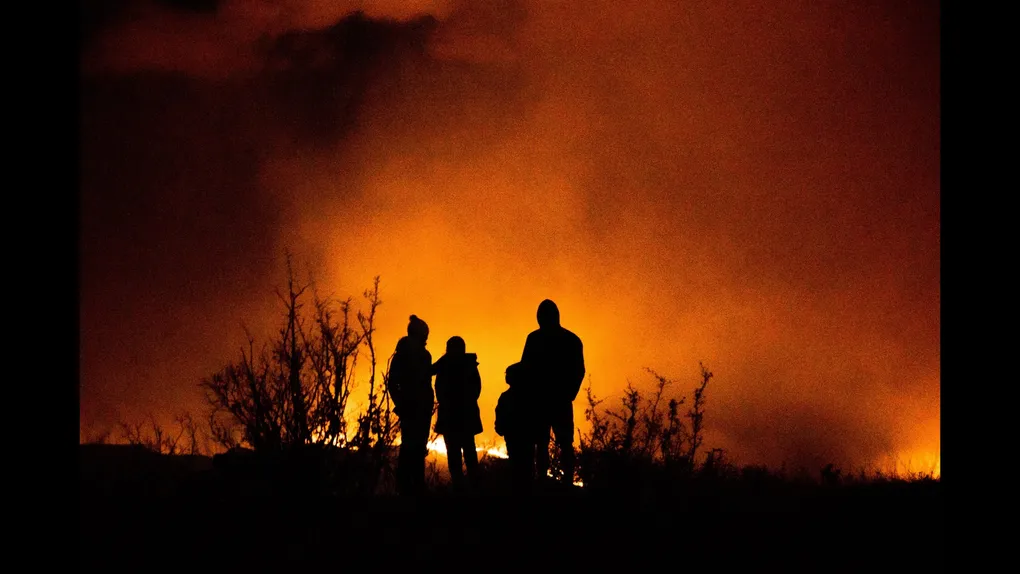
Prepping for a wildfire: Harden your home against the ember storm
The house that survived the wind-driven fire did so because of a gutter cleaning nobody got credit for. Its neighbors ignited in the night from embers landing in leaf-filled gutters a quarter mile ahead of the flame front, while the clean-gutter house sat between two burned lots like an accident of diligence. Wildfires are the fastest-moving natural disaster on Earth. Driven by wind, they can race across a landscape at speeds that outpace a car, and they can change direction in minutes. Unlike a hurricane, there is no days-long warning. Unlike a tornado, there is no minutes-long shelter. A wildfire is a moving wall of fire, and your survival depends on preparation and early evacuation.
The good news is that wildfire survival is well understood. The homes that burn are almost always ignited not by the flame front, but by wind-blown embers landing on vulnerable spots, gutters, vents, and dry vegetation. Harden those spots, create defensible space, and evacuate early, and you dramatically improve your odds. This series shows you how.
Disclaimer: The information provided in this article is for general informational and educational purposes only. It is not intended as, and should not be considered, legal, medical, or architectural advice. Wildfire risks vary greatly by geography. Always follow the instructions of local authorities and fire officials.
The Readiness Audit
If an ember storm reached your neighborhood tonight, what would it find?
- Green: Your gutters and vents are hardened, your defensible space zones are maintained, and your go-bag sits by the door.
- Yellow: You have landscaping but dry debris against the house, and no evacuation plan.
- Red: You have never cleared anything, and your plan is “we’d leave when we saw fire.”
If you are Yellow or Red, start with Part 1, because embers, not flames, are the enemy.
Part 1: Anatomy of a Wildfire
Wildfires are driven by three things: fuel, weather, and topography. Understanding how a fire moves, and especially how embers ignite homes, is the foundation of your defense.
Caution: The “Flame front” distraction. People picture the wall of flame and think that’s what burns their house. In reality, most homes are ignited by wind-blown embers that travel a mile ahead of the fire and land in gutters, vents, and dry vegetation.
The Takeaway: When you understand the anatomy of the beast, you stop fearing the flame and start hardening against the embers.
Read the full guide on Anatomy of a Wildfire
Part 2: Home Hardening
Your home’s survival depends on its weakest point. Embers exploit gutters full of leaves, unscreened vents, and flammable siding. Hardening your home is the single most effective thing you can do.
Caution: The “Distance” myth. People think living far from the forest means they’re safe. But embers can travel a mile or more, and homes in suburban neighborhoods burn just as readily as homes in the woods.
The Takeaway: The roof, the gutters, the vents, the siding, and the deck are the five surfaces the ember storm reads first.
Read the full guide on Home Hardening
Part 3: Defensible Space
Defensible space is the buffer zone around your home where you manage vegetation to slow the fire and give firefighters a chance. It’s your home’s best friend in a wildfire.
Caution: The “Cleared lot” misconception. Defensible space doesn’t mean a barren moonscape. It means strategic vegetation management in three zones, out to 100 feet, that breaks up the fire’s fuel.
The Takeaway: Lean, clean, and green, and the five feet touching your house belong to gravel, not beauty.
Read the full guide on Defensible Space
The Wildfire Survival Manual
When the evacuation order comes, you will not remember a 10-step plan. The checklist consolidates this entire series into a printable script, from blue-sky hardening to the recovery clock.
The Takeaway: The go-bag is the checklist made physical, and the evacuation trigger is the order, not the smoke you can see, because a wind-driven fire can move at 14 mph and change direction in minutes.
Read the full guide on The Wildfire Survival Manual Checklist
The Essential Kit Checklist
- The hardening: Class A roof, clean gutters, 1/8-inch vent mesh, non-combustible zones.
- The space: three defensible zones maintained out to 100 feet, pre-season cleanup scheduled.
- The bag: N95 respirators, sealed goggles, documents, water, medications, charger, by the door.
- The trigger: evacuate the moment the order is issued, never the moment the fire becomes visible.
Scenario Planner (Contingencies)
“The fire is on the other side of the county.” The trap: treating distance as a countdown you can watch. The fix: the 14-mph math, wind-driven fires change direction in minutes and cut off escape routes, so the order is the trigger regardless of what the horizon looks like.
“We’re surrounded by forest, it’s hopeless.” The trap: surrendering to geography. The fix: the clean-gutter house, homes survive because of the weak points they fix, and every hardened gutter, screened vent, and cleared zone measurably changes the ember storm’s outcome.
Next Steps
- Re-run the Readiness Audit. Scroll back to the top, answer the three questions honestly, and close whichever gap they reveal before you close this tab.
- Print the checklist. The kit list above only works if it exists when the power is out, so paper beats apps here.
- Read Part 1: Anatomy of a wildfire first, because the ember mechanism explains every hardening step that follows.
Originally adapted from public FEMA, CAL FIRE, and NFPA Firewise guidance (public domain).