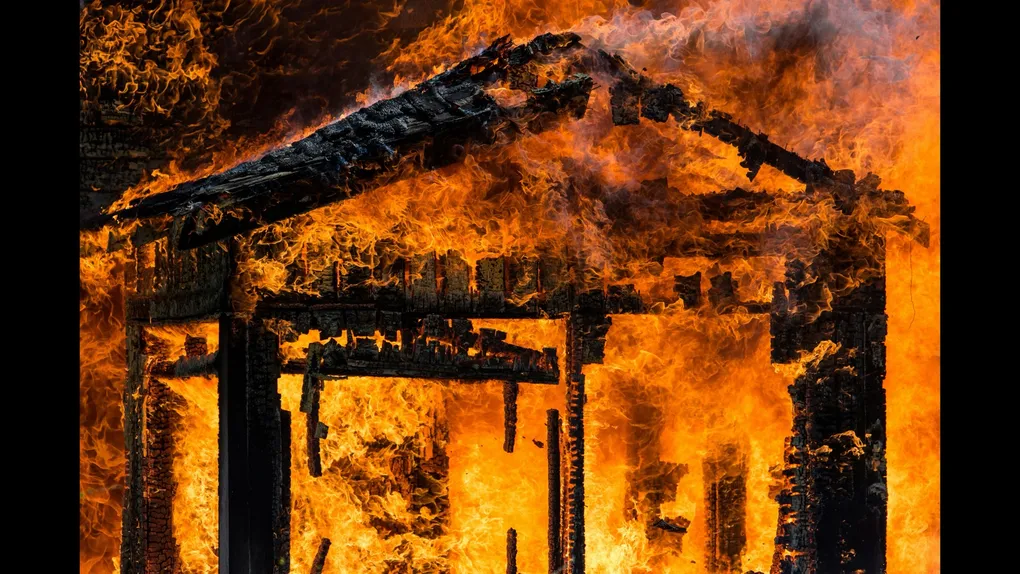
Prepping for a wildfire (Part 1): Anatomy of a wildfire
The fire investigator who mapped the surviving houses in the burn scar found the pattern nobody wants to hear: the flame never touched most of them. What the houses had in common was an ember, a gutter, and a gap of time. The fire’s heat and wind lofted burning debris a mile ahead of the front, it landed in leaf-filled gutters and unscreened attic vents, and the houses burned from the inside out while the fire was still two ridges away. Wildfires are the fastest-moving natural disaster on Earth. Driven by wind, they can race across a landscape at speeds that outpace a car, and they can change direction in minutes.
Caution: The “Flame front” distraction. People picture the wall of flame and think that’s what burns their house. In reality, most homes are ignited by wind-blown embers that travel a mile ahead of the fire and land in gutters, vents, and dry vegetation. When you understand the anatomy of the beast, you stop fearing the flame and start hardening against the embers.
Disclaimer: The information provided in this article is for general informational and educational purposes only. It is not intended as, and should not be considered, professional or emergency-response advice. Always follow the instructions of local authorities and fire officials.
The Readiness Audit
Do you know what actually burns homes in a wildfire?
- Green: You know embers, not flames, ignite most homes, and you’ve hardened your gutters, vents, and eaves against them.
- Yellow: You think living far from the forest means you’re safe from wildfire.
- Red: You’ve never cleared the dry vegetation around your home.
If you are Yellow or Red, execute Phase 1 immediately.
Phase 1: The Fire Triangle (Fuel, Weather, Topography)
Goal: Understand what drives a wildfire.
- Fuel: vegetation, grass, brush, and trees. The drier and denser the fuel, the faster the fire spreads.
- Weather: wind is the accelerant, pushing the fire forward and carrying embers. Heat and low humidity dry out the fuel.
- Topography: fire burns faster uphill, slope acts like a chimney, preheating the fuel above it.
The Takeaway: A wildfire is a system of fuel, weather, and topography. You can’t control the weather or the slope, but you can control the fuel around your home.
Phase 2: The Ember Storm (The Real Igniter)
Goal: Understand how homes actually catch fire.
- The mechanism: the fire’s heat and wind loft millions of burning embers into the air. These embers travel a mile or more ahead of the flame front.
- The landing: embers land in gutters full of leaves, on roofs, in unscreened vents, under eaves, and in dry vegetation against the house.
- The result: the embers smolder and ignite, and the house burns, often long before the flame front arrives.
The Takeaway: Your home is most likely to burn from an ember, not a flame. Harden the spots where embers land.
Phase 3: The Speed (Why You Evacuate Early)
Goal: Understand how fast a wildfire moves.
- The speed: a wildfire can move at up to 14 mph in extreme conditions, faster than you can run.
- The direction: wind and slope can change the fire’s direction in minutes, cutting off escape routes.
- The implication: you cannot outrun a wildfire. Your survival depends on evacuating early, before the fire is close.
The Takeaway: A wildfire is faster than you. Evacuate early, before the fire dictates your options.
The Essential Kit Checklist
- The audit: walk your property and identify where embers could land and ignite.
- The gutters: clean leaves and debris from gutters.
- The vents: screen attic and crawl space vents with fine mesh.
- The knowledge: teach your family that embers, not flames, are the real threat.
Scenario Planner (Contingencies)
“I live in a suburban neighborhood, far from the forest.” The trap: assuming distance means safety. The fix: embers travel a mile or more, and suburban homes burn just as readily as forest homes. Harden your home against embers regardless of your distance from the woods.
“The fire is miles away, so I have time.” The trap: underestimating the fire’s speed. The fix: a wildfire can move at 14 mph and change direction in minutes. When an evacuation order is issued, leave immediately, don’t wait for the fire to get closer.
Next Steps
- Walk your property this weekend and write down every ember landing spot you find, because the audit is the map of your home’s weaknesses.
- Clean the gutters before fire season, whichever season that is where you live.
- Read Part 2: Home hardening next, to fix the five surfaces the ember storm reads first.
Originally adapted from public CAL FIRE and NFPA Firewise guidance (public domain).