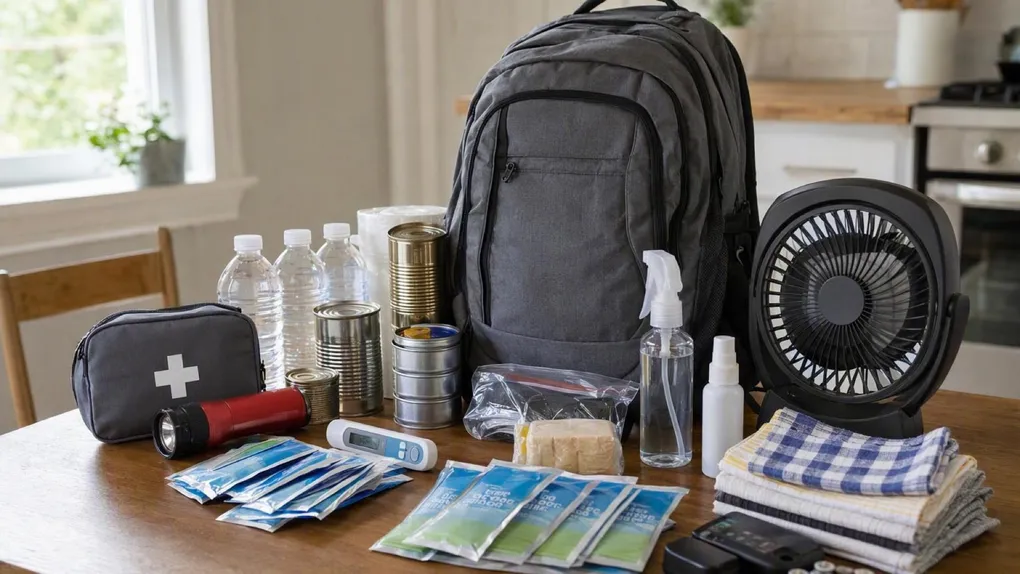
Prepping for a heatwave checklist
The family that came through the worst heatwave of the decade had a laminated page taped inside a kitchen cabinet: their cooling protocol. When the grid failed at 4 PM on day one, nobody debated whether to open the fridge (the no-peek sign was already on it), where to sleep (the lifeboat room was already staged), or when to leave (95 degrees on the wall thermometer, and not a degree of debate). The neighbors improvised. The family executed. This page is the difference.
I’ve spent years living without running water or electricity deep in the woods. I know firsthand that when the power goes out, the romance of “off-grid living” evaporates fast, especially when the temperature spikes. But I also know that humans lived without AC for thousands of years, they didn’t survive by panicking, they survived by adapting their behavior and their environment.
This master checklist is the exact protocol we use in our home. It combines the “old ways” I learned growing up (passive cooling, evaporative tricks) with the data-driven systems we love (monitoring wet bulb temps, electrolyte ratios). It’s practical, it’s low-cost, and it works.
Disclaimer: The information provided in this article is for general informational and educational purposes only. It is not intended as, and should not be considered, legal, medical, or architectural advice. Extreme heat risks vary by individual health and geography. Always consult with medical professionals and local emergency management officials for specific guidance.
Phase 1: Blue Sky Readiness (Do This Now)
Goal: Harden the envelope and stockpile the biology.
The home envelope:
- Check every window, if you can see light through the curtain, it’s letting heat in. Use heavy blackout curtains on west and south windows.
- Keep a roll of heavy-duty aluminum foil and painter’s tape, taping foil to windows reflects 95% of the heat.
- Identify your “cool room”, a downstairs room on the north side, and clear the clutter so you can lay mattresses on the floor.
The biological stockpile:
- Stockpile electrolyte powder (Liquid IV, Pedialyte, or bulk salts), it doesn’t spoil.
- Buy simple spray bottles for every family member, misting your skin mimics sweat without dehydrating you.
- Ensure you have a working digital thermometer to differentiate between “hot” and “heat stroke.”
Phase 2: The Forecast (24 Hours Out)
Goal: Pre-cool and pre-hydrate.
The pre-cool:
- If you have AC, turn it down low (68°F) overnight and into the morning to freeze the structure itself.
- The moment the sun hits, windows and blinds stay closed, it feels like a cave, but a cave is cool.
The consumables:
- Start drinking water and electrolytes the day before, if your urine is dark, you’re already behind.
- Cook food now, you do not want to turn on the stove during the heatwave. Switch to sandwiches, salads, and cold snacks.
- Fill empty freezer space with water jugs for thermal mass.
Phase 3: Grid Down Response (The Event)
Goal: Run the micro-climate and the routine.
The routine shift:
- Institute a “no activity” rule from 12 PM to 4 PM, read, nap, and play quiet games. No chores, low heart rates.
- Watch the thermometer, if the outside temp drops below the inside temp at night, open everything and run fans, then lock it down at sunrise.
Active cooling:
- Sleep under damp sheets with a battery fan running for a swamp cooler effect.
- Apply ice packs to the neck and armpits if anyone starts looking flushed or cranky.
- Give pets fresh, cool water and frozen treats, and ensure deep shade and frozen bottles for outdoor animals.
Phase 4: Medical Triage (Emergency Response)
Goal: Know the red lines cold.
The red lines:
- Heat exhaustion (wet/clammy): if someone is sweating heavily but feels cold and clammy, stop, salt, water, rest, and cooling towels.
- Heat stroke (red/dry/confused): if sweating stops or anyone acts confused or lethargic, it’s 911 time.
- Aggressive cooling: while waiting for help, use the garden hose or a cool bath to get the temperature down immediately.
The Print Protocol
- Print this post: tech fails, have this on paper.
- The urine chart: tape a hydration color chart in the bathroom as a simple visual aid for kids and stubborn adults.
- The cool room drill: take 10 minutes this weekend to actually sit in your designated cool room and figure out if it’s comfortable now, not when it’s 100 degrees.
Next Steps
- Print the Heatwave Survival Checklist you are reading now and tape it inside the kitchen cabinet with the no-peek sign.
- Run the two 10-minute drills this weekend: the cool-room sit-down and the curtain audit. Both are blue-sky jobs that pay off in triple digits.
- Start the series from the beginning with Part 1: Beyond the thermometer if any line here made you pause, because the reasoning behind every box lives in the six parts.