Prepping for a heatwave (Part 1): Beyond the thermometer
The crew foreman on the road-paving job had a rule that sounded superstitious until you understood the physics. He did not care what the thermometer said. He cared about a wet sock. “Wrap a wet rag around a thermometer,” he told the new kid, “and swing it around. If that rag dries out, you can work. If it stays wet and the number barely drops, you go home, because your skin is about to be as useless as that rag.” Two summers later, a rookie ignored the rag, collapsed at 2 PM on a 91-degree day, and the crew learned the number that actually decides everything: wet bulb.
We are conditioned to look at a standard thermometer to judge danger. We see “90°F” and think, “that’s hot, but I’ve handled worse.” This is a dangerous oversimplification. 90°F in a dry desert is a nuisance, 90°F in a humid swamp can be a death sentence.
The human body has a hard “thermal ceiling.” It does not matter how tough you are, how much water you drink, or how fit you are. If the combination of heat and humidity crosses a specific threshold, the laws of physics prevent your body from cooling down, you will cook from the inside out. By learning to read wet bulb temperature, you stop guessing and gain the ability to look at a forecast and know instantly if it is safe to work in the yard or if you need to initiate emergency cooling. This is Part 1 of the heatwave series.
Disclaimer: The information provided in this article is for general informational and educational purposes only. It is not intended as, and should not be considered, medical or professional advice.
The Readiness Audit
Do you know your real thermal ceiling?
- Green: You know what wet bulb temperature is, have a hygrometer indoors, and know your stopping thresholds.
- Yellow: You watch the heat index occasionally but cannot define wet bulb.
- Red: You judge danger by the thermometer alone.
If you are Yellow or Red, execute Phase 1 immediately.
Phase 1: The Biological Radiator (How You Cool Down)
Goal: Understand the machine you are defending.
Your body is a biological engine that constantly produces heat. To stay at a safe 98.6°F, you must dump that excess heat into the environment.
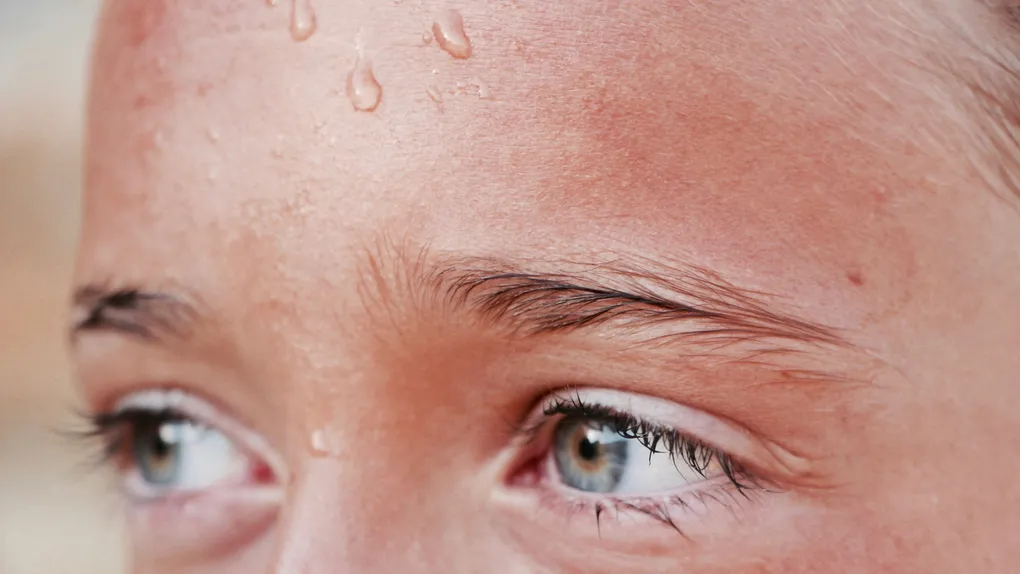
- Evaporative cooling: sweating itself does not cool you, the evaporation of that sweat does. When sweat turns from liquid to gas, it pulls heat energy away from your skin. This is your primary cooling system.
- The failure point, humidity: the air acts like a sponge. In low humidity, the air is a dry sponge that sucks up your sweat instantly. In high humidity, the air is a wet sponge already full of water vapor that cannot absorb your sweat. The sweat sits on your skin, hot and sticky, and your core temperature rises uncontrollably.
The Takeaway: Sweat is only the first half of cooling, evaporation is the second, and humidity is the hand that blocks the second half.
Phase 2: Defining the Threat (Wet Bulb Temperature)
Goal: Learn the number that decides survival.
Scientists and military commanders use wet bulb globe temperature (WBGT) to measure this danger. Imagine wrapping a wet sock around a thermometer bulb and swinging it through the air: if the air is dry, the water evaporates and cools the thermometer, if the air is 100% humid, the water cannot evaporate and the thermometer reads the same as the air.
The critical thresholds:
- 82 to 87°F WBGT: caution, physical activity becomes dangerous for those not acclimated.
- 88 to 90°F WBGT: extreme caution, max exertion time limits enforced by military and sports leagues.
- 95°F (35°C) WBGT: the survivability limit, even a healthy person sitting perfectly still in the shade with unlimited water will eventually die of hyperthermia.
The Takeaway: Ninety-five degrees wet bulb is the ceiling of human physiology, and everything below it is a budget of minutes and effort you get to spend.
Phase 3: Heat Index vs. WBGT (Know the Difference)
Goal: Use the right number for the right situation.
- Heat index (the shadow number): calculates temperature + humidity, but only for shady conditions, it does not account for the sun beating down on you. Good for general awareness indoors or in the shade.
- Wet bulb globe temperature (the sun number): calculates temperature + humidity + wind speed + solar radiation. Direct sunlight can add 15°F to the “feels like” temperature, and wind can lower it. Mandatory if you are working, exercising, or moving outdoors in the sun.
The Takeaway: The shade number flatters you, the sun number tells the truth, and outdoor work is planned off the sun number.
Phase 4: The Red Flags (When to Stop)
Goal: Set hard lines before judgment fails.
You must have hard lines in the sand, do not rely on “how you feel,” because heat confusion (delirium) is a symptom of heat stroke, and you will not know you are in trouble until you collapse.
- High humidity + high heat: if the temp is 90°F+ and humidity is 60%+, outdoor labor should stop or be reduced to 15-minute intervals.
- Nighttime heat: if the temperature does not drop below 75°F at night, your body cannot reset, this cumulative heat stress is the primary cause of death during multi-day heatwaves.
- No wind: stagnant air kills. Even a fan or a breeze aids slight evaporation.
The Takeaway: The stop lines are numbers, not feelings, and the deadliest one is the night that never cools below 75.
The Essential Kit Checklist
- The app: download the OSHA-NIOSH Heat Safety Tool or WeatherBug to track real-time risk.
- The hardware: a portable hygrometer (measures humidity and temp) for inside your home.
- The chart: print a heat index chart and stick it on your fridge or garage wall.
- The electrolytes: stockpile oral rehydration salts (ORS) or electrolyte powder, water is not enough when the wet bulb is high.
Scenario Planner (Contingencies)
“I drank a gallon of water, but I still feel faint.” The trap: hyponatremia (water intoxication), you flushed all the salt out of your body. The fix: salt, not just fluid. Eat salty pretzels, drink pickle juice, or use a sports drink mix, and stop drinking plain water until you get salt in your system.
“The power is out, and the indoor humidity is spiking.” The trap: the greenhouse effect indoors. The fix: ventilation vs. insulation, if it is cooler outside at night, open everything, if it is hotter and humid outside, seal the house. If the indoor WBGT gets dangerous, use evaporative cooling on your skin (wet t-shirt + battery fan) or leave to a cooling center.
Next Steps
- Download the heat-safety app today and check tomorrow’s WBGT against the thresholds, so the numbers become familiar before they matter.
- Write your family’s stop lines on the fridge: 90°F+ with 60%+ humidity means 15-minute shifts, and a 75°F night means the body got no reset.
- Read Part 2: Passive cooling tactics next, because once you know the ceiling, the next problem is keeping the house below it without power.
Originally adapted from public NWS and OSHA heat-safety guidance (public domain).