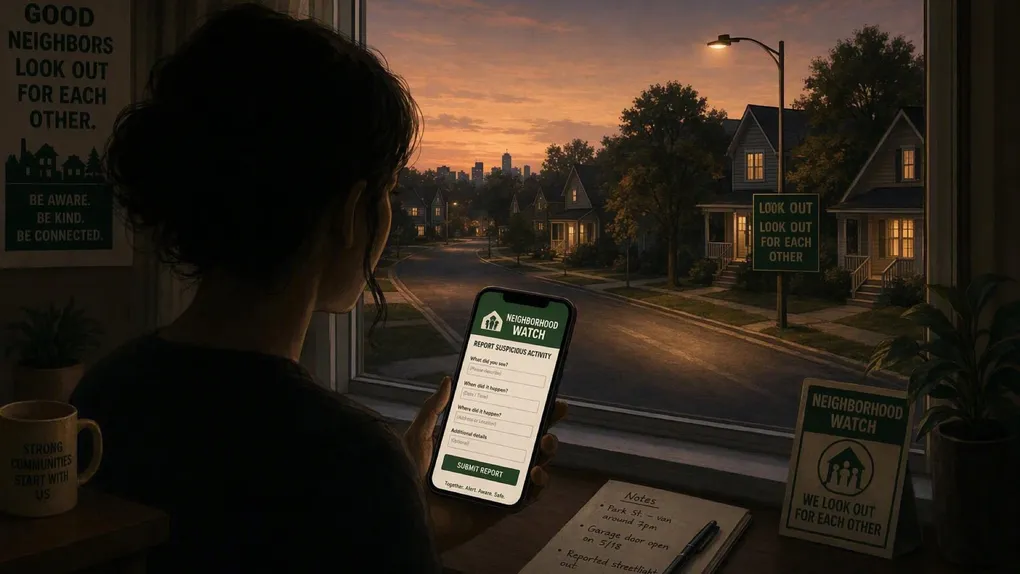
Terrorism Awareness for Volunteers
On May 1, 2010, street vendors in Times Square noticed a smoking SUV with its blinkers on, engine running, and nobody inside. They said something to a police officer, and thousands of people were cleared while the bomb was dismantled. CERT Unit 8 opens with that story because terrorism preparedness is mostly a neighbor’s skill, not a soldier’s: noticing what does not fit and reporting it. This post distills Unit 8’s eight signs, the soft-target reality, and the CERT role when the unthinkable happens.
Disclaimer: The information provided in this article is for general informational and educational purposes only. It is not legal, security, or emergency-response advice. Report suspicious activity to law enforcement and follow the instructions of authorities.
The Readiness Audit
Would you know what to report, and to whom?
- Green: You know the eight signs, the FBI SAR tip line, and your shelter-in-place drill for a CBRNE event.
- Yellow: You would report something obviously dangerous but could not name the patterns.
- Red: You assume someone else is watching.
If you are Yellow or Red, execute Phase 1 immediately.
Phase 1: The Eight Signs of Terrorism
Goal: Learn the patterns, in their usual order.
The manual lists the signs exhibited by potential terrorists, often in this order: Surveillance, where the targeted area is watched and studied carefully, including recording or monitoring activities. Elicitation, where information specific to the intended target is gathered by mail, phone, or in person. Tests of Security, where local security measures are tested and analyzed, including measuring reaction times to breaches. Funding, raising, transferring, and spending money, which may include selling drugs or stolen merchandise, human trafficking, and funneling money through businesses or charities. Acquiring Supplies, gathering weapons or weapon components, transportation, and communications, often paid for in cash only. Impersonation or Suspicious People Who Do Not Belong, people impersonating roles to gain access, or people who simply do not fit the location. Rehearsal and Dry Runs, mapping routes, determining traffic flow and timing, and running test operations before the actual attack. And Deployment, the final and most urgent phase when assets are deploying into position and attack is imminent.
The Takeaway: No single sign proves anything, but the manual notes the presence of even a few may indicate the possibility of an attack. Report to local law enforcement, and the FBI’s Suspicious Activity Reporting tip line (tips.fbi.gov) takes reports of any suspicious activities.
Phase 2: Soft Targets and the CERT Role
Goal: Understand what gets hit and what volunteers do.
While hardened targets such as government buildings, military installations, and infrastructure like power grids and dams remain viable, attacks have trended toward easier, less secure targets: schools, parks, large gathering spaces, cafes, and concert halls. The unit is clear about the boundary of the volunteer role: it is not the mission of CERT volunteers to keep constant watch for these signs, but everyone should be alert to changes in their environment as a clue to a possible attack and report suspicious activities to appropriate authorities. During an incident, CERT volunteers support professionals: they do not enter scenes to confront attackers.
The Takeaway: Detection is a neighbor’s job, response is a professional’s job. The Times Square vendors changed the outcome without approaching the vehicle.
Phase 3: If the Worst Happens
Goal: Know the response basics for CBRNE and active shooter events.
For a chemical, biological, radiological, nuclear, or explosive (CBRNE) event, the unit’s sheltering guidance: seal a room by covering openings where air could enter with duct tape, securing them as you go. Chemicals used in an attack will be carried on the wind and dissipate over time, and you will generally not need to stay sealed for more than a few hours: monitor Emergency Alert System broadcasts to know when it is safe to leave. After contaminants have cleared, open windows and ventilate before normal use. A nuclear device causes deadly effects including blinding light, intense heat, initial nuclear radiation, blast, fires started by the heat pulse, and secondary fires. For active shooter situations, the unit reinforces the civilian response: run, hide, or fight, and only commit to fighting as a last resort.
The Takeaway: The shelter decision is measured in hours, not days, and the radio decides. Your job in the first minutes is distance from the hazard and information from official channels.
The Essential Kit Checklist
- The Report Card: Local law enforcement non-emergency number plus the FBI SAR tip line (tips.fbi.gov) saved in every phone.
- The Shelter Kit: Duct tape, plastic sheeting, and pre-cut pieces for sealing a room’s openings.
- The EAS Access: A battery or crank radio that receives Emergency Alert System broadcasts.
- The Run-Hide-Fight Talk: A family conversation held about response options in public places.
- The Two Exits Habit: Noting two exits each time you enter a building, per the unit’s guidance.
Scenario Planner (Contingencies)
“Reporting feels like profiling someone.” The trap: hesitating to report observable behavior because of how it might look. The fix: the unit’s guidance is to report specific activities and behaviors (what you saw, where, when), not judgments about people. Let law enforcement assess the pattern.
“A sealed room is a permanent bunker.” The trap: over-preparing for weeks of confinement. The fix: the manual states you will generally not need to stay sealed more than a few hours while the wind carries contaminants away, so stock the room for comfort and information, not for siege living.
Next Steps
- Re-run the Readiness Audit. Scroll back to the top, answer the three questions honestly, and close whichever gap they reveal before you close this tab.
- Print the checklist. The kit list above only works if it exists when the power is out, so paper beats apps here.
- Fold it into the family plan. A prepared household beats prepared person, so put these steps in front of everyone who shares your roof.
Next: Read The CERT Readiness Checklist to turn nine units of training into one printable page.
Adapted from FEMA - CERT Basic Training (public domain). Read the original: CERT Basic Training Participant Manual (2019).