Prepping for anything (Part 6): Recovering from disaster
The man who waded back into his flooded house on day one to “start cleaning” made two mistakes before lunch. He checked the breaker panel while standing in six inches of water, and he signed a roofing contract with a crew that had materialized from out of state with a pickup truck and a lot of confidence. The water did not hurt him. The re-entry did, and the scammer nearly finished the job. The storm was over. The disaster, for him, was just getting organized.
The disaster does not end when the storm passes. In many ways, the hardest part begins then, returning home, cleaning up, filing claims, and rebuilding. The silence after a disaster is deceptive: the “mold clock” is ticking, and so are the scammers.
Caution: The “mold clock” and the scammer are both ticking. You have a narrow window to dry out your home before mold takes hold, and fraudsters move in the moment the disaster does. Knowing how to re-enter safely, file a claim, and spot fraud is the final phase of preparedness. This is Part 6 of the “Prepping for anything” series.
Disclaimer: The information provided in this article is for general informational and educational purposes only. It is not intended as, and should not be considered, professional, legal, or insurance advice. Always follow the instructions of local authorities and consult a licensed professional for your specific situation.
The Readiness Audit
Do you know how to recover safely after a disaster?
- Green: You know the re-entry safety checks, the insurance claim steps, and the signs of disaster fraud.
- Yellow: You would figure it out as you go, but you have not thought about it in advance.
- Red: You have no plan for what happens after the disaster, only for surviving it.
If you are Yellow or Red, execute Phase 1 immediately.
Phase 1: Re-Enter Safely
Goal: Do not become a second casualty of the disaster.
- Wait for the all-clear: only return home when local authorities say it is safe.
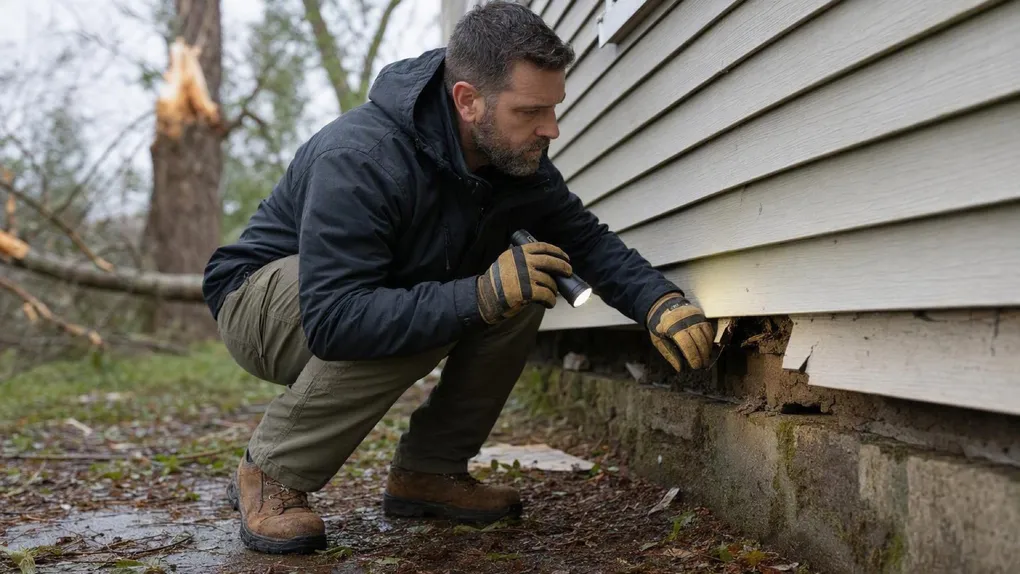
- The outside check: use a flashlight to inspect the outside for loose or downed power lines, gas leaks, and structural damage.
- The gas rule: if you smell gas or hear a hissing sound, open a window and leave immediately. Only professionals should turn the gas back on.
- The electrical rule: do not check the electrical system if you are wet or standing in water. Turn off electricity at the main breaker if possible.
- The structure rule: do not enter a building with cracks in the walls, doors out of square, or a shifted foundation.
The Takeaway: The disaster already happened. Do not let re-entry be the thing that hurts you.
Phase 2: The Inside Inspection
Goal: Check the interior for hidden hazards.
- Appliances: if appliances are wet, turn off the electricity, unplug them, and let them dry. Have them checked by a professional before use.
- Water: check with your local water authority that your water is safe to drink. A Boil Water Notice may be in effect.
- Food: throw away perishable food that has been above 40°F for over two hours, and anything that contacted floodwater or fire.
- Basements: if your basement flooded, pump it out slowly, about one-third of the water per day, to avoid wall collapse.
- Pests: be aware of mice, rats, insects, or snakes that may have come with the storm.
The Takeaway: The inside of a flooded home is a hazard zone. Inspect before you settle in.
Phase 3: File the Insurance Claim
Goal: Start the claim process correctly and quickly.
- Contact immediately: call your agent or insurance company to file a claim. Have your policy number and a reachable phone or email ready.
- Document everything: separate damaged from undamaged property. Photograph all damage, and make a list of damaged or lost items with purchase dates, values, and receipts.
- Keep receipts: if you must stay elsewhere, keep records of all extra expenses, hotels and restaurant meals. Most policies cover “loss of use.”
- The proof of loss: work with your adjuster to complete a Proof of Loss, your sworn statement of the amount you are claiming.
The Takeaway: A well-documented claim is a fast claim. The inventory you built in Part 4 is now your best friend.
Phase 4: Protect Yourself from Fraud
Goal: Spot the scammers who follow disasters.
- The ID check: ask for official laminated photo ID. A FEMA shirt or SBA jacket is not proof of identity.
- The information rule: do not give out your Social Security or bank account numbers unless you are sure it is safe. FEMA inspectors never need this to begin services.
- The door-to-door warning: beware of people going door-to-door claiming to be contractors, especially if they ask for financial information.
- The money rule: federal workers do not ask for or accept money. FEMA and SBA staff never charge for help, inspections, or applications.
- The report: report suspicious activity to local authorities and the FEMA Disaster Fraud Hotline at 1-866-720-5721.
The Takeaway: Disasters bring out the best in people, and the worst. Verify before you trust.
The Essential Kit Checklist
- The all-clear: wait for official permission to return.
- The safety check: inspect for gas, electrical, and structural hazards.
- The claim: contact insurance and document all damage.
- The fraud guard: verify IDs and never pay for “free” help.
Scenario Planner (Contingencies)
“I’ll just go home and start cleaning up right away.” The trap: re-entering before it is safe. The fix: wait for the all-clear, then inspect for gas, electrical, and structural hazards. A flooded home can collapse, electrocute, or poison you.
“A contractor showed up offering to fix my roof for cash.” The trap: disaster fraud. The fix: verify their license and ID, get a written estimate, and never pay in full upfront. Legitimate FEMA and SBA staff never charge for help or recommend specific contractors.
Next Steps
- Save the FEMA Disaster Fraud Hotline (1-866-720-5721) in your phone now, so it is a lookup, not a research project, when strangers start knocking.
- Walk your re-entry rules once with the family: all-clear, outside check, gas rule, electrical rule, structure rule. Five lines on a card.
- Read the Master Checklist next, the one-page working document that compresses all six parts into a printable protocol.
Adapted from FEMA Ready.gov “Are You Ready?” (public domain).