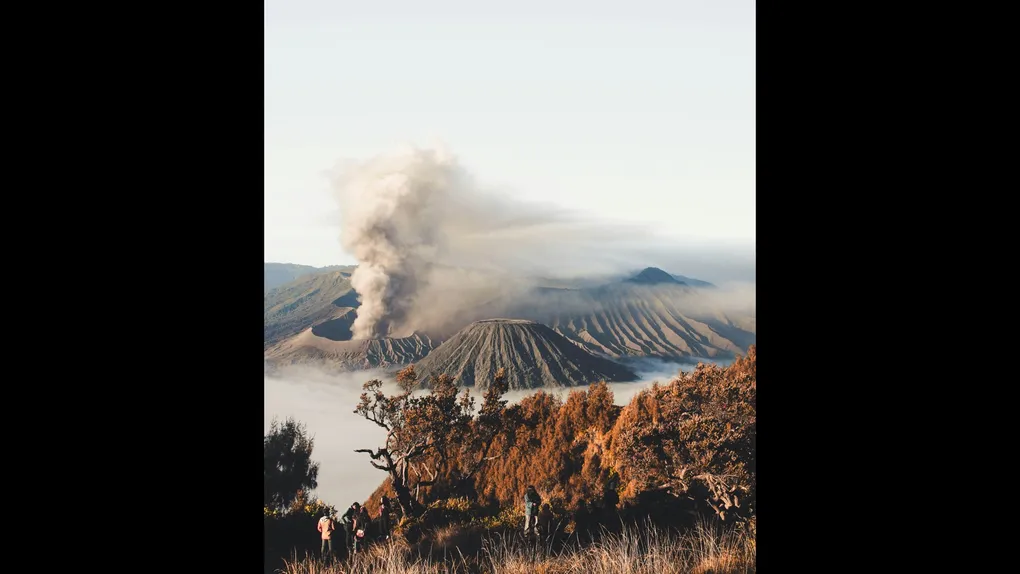
Prepping for a volcanic eruption (Part 3): The danger zone
The survivor’s account from the eruption that buried the valley town contained one detail that explains volcanic death statistics better than any chart. He had watched the gray wall come down the mountain and told a friend they could make it to the truck. The wall was moving faster than any vehicle on the road, and it was 1,000 degrees. There was no truck, no road, no decision. There was only geography: the people who were out of the flow’s path when it started lived, and the people in its path did not, no matter what they did in the seconds they were given.
Pyroclastic flows and lahars are the deadliest volcanic hazards, and they move faster than you can run. If you live in their path, your only defense is evacuation, and it must happen before the eruption.
Caution: The “I can outrun it” myth. A pyroclastic flow can travel at 100+ mph and reach temperatures of 1,000°F. A lahar can travel at 30 mph. You cannot outrun either. Evacuation is the only answer. This is Part 3 of the volcano series.
Disclaimer: The information provided in this article is for general informational and educational purposes only. It is not intended as, and should not be considered, professional or geological advice. Always follow the instructions of local authorities and volcano observatories.
The Readiness Audit
Do you know if you live in a pyroclastic flow or lahar zone?
- Green: You’ve checked your volcanic hazard map and you know exactly which zones apply to your home.
- Yellow: You know pyroclastic flows are dangerous, but you’ve never checked your hazard zone.
- Red: You think you could outrun a pyroclastic flow if you saw it coming.
If you are Yellow or Red, execute Phase 1 immediately.
Phase 1: The Pyroclastic Flow (The Unsurvivable Hazard)
Goal: Understand the deadliest volcanic phenomenon.
- The nature: a superheated avalanche of gas, ash, and rock that races down the volcano’s slopes at 100+ mph.
- The temperature: up to 1,000°F, it incinerates everything in its path.
- The reality: if you are in its path, you will not survive. There is no shelter, no outrunning it, no last-minute escape.
- The defense: the only defense is to not be there. Evacuate the zone before the eruption.
The Takeaway: A pyroclastic flow is not survivable in its path. Your only defense is evacuation.
Phase 2: The Lahar (The Mudflow Hazard)
Goal: Understand the hazard that strikes after the eruption.
- The nature: a volcanic mudflow, a fast-moving slurry of water, ash, and rock.
- The trigger: eruptions melt snow and ice, or heavy rain mixes with ash, creating the mudflow.
- The speed: up to 30 mph, faster than you can run.
- The path: lahars follow river valleys and channels, traveling for miles and burying communities long after the eruption.
The Takeaway: If you live in a valley below a volcano, you are in the lahar path. Know your evacuation route out of the valley.
Phase 3: The Hazard Map (Your Most Important Document)
Goal: Know your zone before the eruption.
- The document: your local volcanic hazard map shows the zones for pyroclastic flows, lahars, and ashfall.
- The action: obtain the map, find your home, and identify which zones you’re in.
- The implication: if you’re in a pyroclastic flow or lahar zone, evacuation is your plan. If you’re only in the ashfall zone, sheltering in place may be viable.
The Takeaway: The hazard map is the single most important document in volcanic preparedness. Get it, read it, and plan around it.
Phase 4: The Evacuation Trigger
Goal: Know when to leave.
- The signs: volcanoes give warning, increased seismic activity, ground swelling, gas emissions, and official alerts.
- The trigger: when authorities issue an evacuation order for your zone, leave immediately. Do not wait to “see what happens.”
- The reason: pyroclastic flows and lahars give no time to escape once they start. The evacuation must happen before the eruption.
The Takeaway: The evacuation order is your trigger. Leave immediately, before the roads clog and the hazards begin.
The Essential Kit Checklist
- The map: obtain your local volcanic hazard map and identify your zone.
- The route: map your evacuation route out of any pyroclastic flow or lahar zone.
- The go-bag: a go-bag with respirators, goggles, water, and documents, ready by the door.
- The alerts: sign up for volcano observatory alerts and enable Wireless Emergency Alerts.
Scenario Planner (Contingencies)
“The evacuation order came, but I want to stay and protect my home.” The trap: valuing property over life. The fix: a pyroclastic flow will destroy your home whether you’re in it or not. The only thing you can save is yourself. Leave immediately.
“I live in a valley below the volcano, but the eruption is over.” The trap: assuming the danger has passed. The fix: lahars can strike long after the eruption, triggered by rain on fresh ash. Stay alert to lahar warnings and know your route out of the valley.
Next Steps
- Find your address on the hazard map tonight. Flow zone, lahar zone, or ash-only: the answer decides whether your plan is a go-bag or a sealed house.
- Map the route out of the valley if you live below a volcano, and drive it once in daylight so it is a memory, not a guess.
- Read Part 4: The evacuation next, for the timing, the packing, and the driving that turn a hazard map into a safe departure.
Originally adapted from public USGS volcano-hazard guidance (public domain).