Prepping for a tornado (Part 1): Anatomy of a tornado
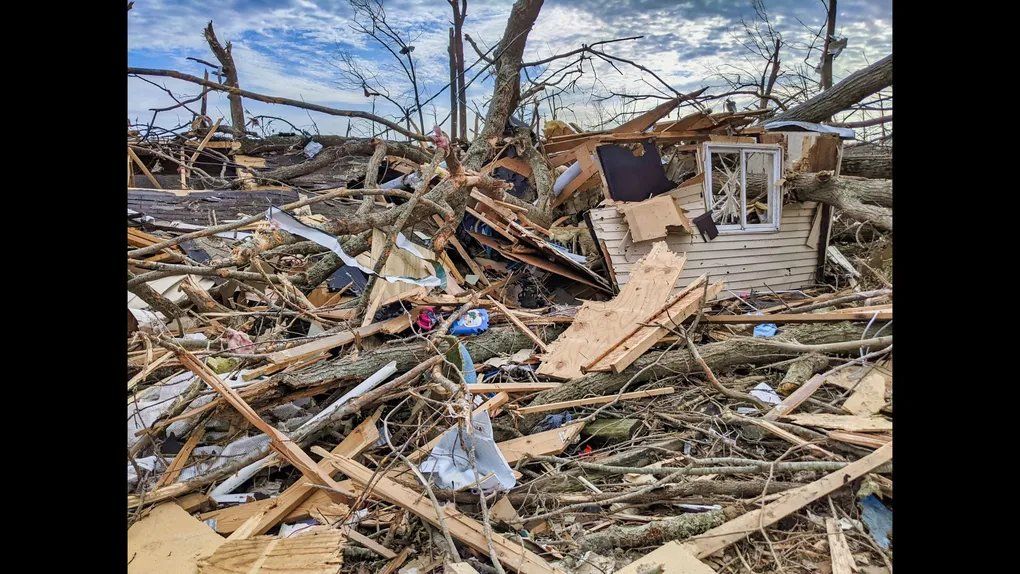
The insurance adjuster who walked the path of the EF3 that crossed the county learned his lesson about debris from the walls themselves. House after house showed the same signature: window glass embedded in interior doors, framing lumber driven through siding, and the front door of a brick home blown inward by a neighbor’s riding mower. Nobody in the survivable interior rooms was “sucked up.” They were hit, or they were shielded, and the difference was how many walls stood between them and the flying hardware.
Tornadoes are the only major disaster where the warning is measured in minutes, not days. Yet the people who die are rarely the ones who didn’t hear the warning. They are the ones who didn’t understand the storm they were facing.
Caution: The “Wind” distraction. People picture the funnel cloud and think the danger is being “sucked up” into the sky. In reality, most tornado deaths come from debris, a 2x4 driven through a wall at 100 mph becomes a missile. When you understand the anatomy of the beast, you stop fearing the funnel and start sheltering from the debris.
Disclaimer: The information provided in this article is for general informational and educational purposes only. It is not intended as, and should not be considered, professional or emergency-response advice. Always follow the instructions of local authorities during an active tornado event.
The Readiness Audit
Do you know what actually kills people in a tornado?
- Green: You know the difference between a watch and a warning, you have a NOAA weather radio, and you know your shelter is an interior room with no windows.
- Yellow: You rely on outdoor sirens and think a basement is the only safe place, so you assume you’re doomed if you don’t have one.
- Red: You think opening the windows will “equalize pressure” and save your house.
If you are Yellow or Red, execute Phase 1 immediately.
Phase 1: The EF Scale (Saffir-Simpson’s Violent Cousin)
Goal: Understand the structural threat.
Tornadoes are rated EF0 to EF5 based on damage, assigned after the fact.
- EF0 (65-85 mph): minor. Branches snap, shingles lift. Rarely deadly.
- EF1 (86-110 mph): moderate. Roofs damaged, mobile homes overturned.
- EF2 (111-135 mph): considerable. Roofs torn off, mobile homes destroyed.
- EF3 (136-165 mph): severe. Exterior walls collapse, cars thrown.
- EF4 (166-200 mph): devastating. Well-built homes leveled.
- EF5 (200+ mph): incredible. Homes swept clean off foundations.
The Takeaway: The rating is assigned after the storm. In the moment, you don’t know if you’re facing an EF1 or an EF5, so you shelter as if it’s an EF5 every single time.
Phase 2: Watch vs. Warning (The Two Words That Save Lives)
Goal: Know exactly when to act.
This is the single most important distinction in tornado preparedness, and people still get it wrong.
- Tornado watch: conditions are favorable for tornadoes. The atmosphere is primed. This is your “get ready” signal, charge your phone, put on shoes, and keep the radio on.
- Tornado warning: a tornado has been spotted by a trained spotter OR indicated on Doppler radar. This is your “take shelter now” signal. There is no more time to prepare.
The Takeaway: A watch means “be ready.” A warning means “go now.” If you wait for the warning to prepare, you have already lost.
Phase 3: The Debris Missile (The Real Killer)
Goal: Understand why you shelter the way you do.
The wind itself rarely kills. What kills is what the wind picks up.
- The physics: a 2x4 at 100 mph carries the kinetic energy of a small cannonball. A piece of glass becomes a razor blade. A car becomes a battering ram.
- The implication: your shelter must put as many walls between you and the outside as possible. Every wall the debris has to punch through robs it of energy.
- The myth: “opening windows equalizes pressure and saves the house.” This is false. The house will be destroyed by wind and debris, not by pressure difference. Opening windows wastes time and lets debris in.
The Takeaway: You are not sheltering from the funnel. You are sheltering from the missiles. Get low, get in, and put walls between you and the sky.
The Essential Kit Checklist
- The radio: a NOAA weather radio with a battery backup (not just a siren).
- The shoes: sturdy shoes kept by the bed, you may have to walk over broken glass.
- The helmet: a bike or construction helmet for each family member to protect against debris.
- The whistle: a whistle in the shelter to signal rescuers if you’re trapped.
- The light: a flashlight or headlamp in the shelter, in case the power is out.
Scenario Planner (Contingencies)
“The sky turned green, but no siren sounded.” The trap: assuming no siren means no danger. The fix: the sky turning green is a classic sign of a hail-bearing supercell that can spawn a tornado. Trust the radio and the radar, not the siren. If a warning is issued, shelter immediately.
“It’s 3 AM and I’m asleep.” The trap: relying on a siren you can’t hear indoors. The fix: a NOAA weather radio with a loud alarm that wakes you. Nighttime tornadoes are more than twice as deadly precisely because people sleep through the warning.
Next Steps
- Put shoes and helmets by the bed tonight, the two cheapest debris protections in the entire discipline.
- Explain the windows myth to the whole household, because the person who stops to “equalize pressure” during a warning is donating their thirteen minutes.
- Read Part 2: The safe room next, to designate and stock the room that shields you from the missiles.
Originally adapted from public NOAA and National Weather Service guidance (public domain).