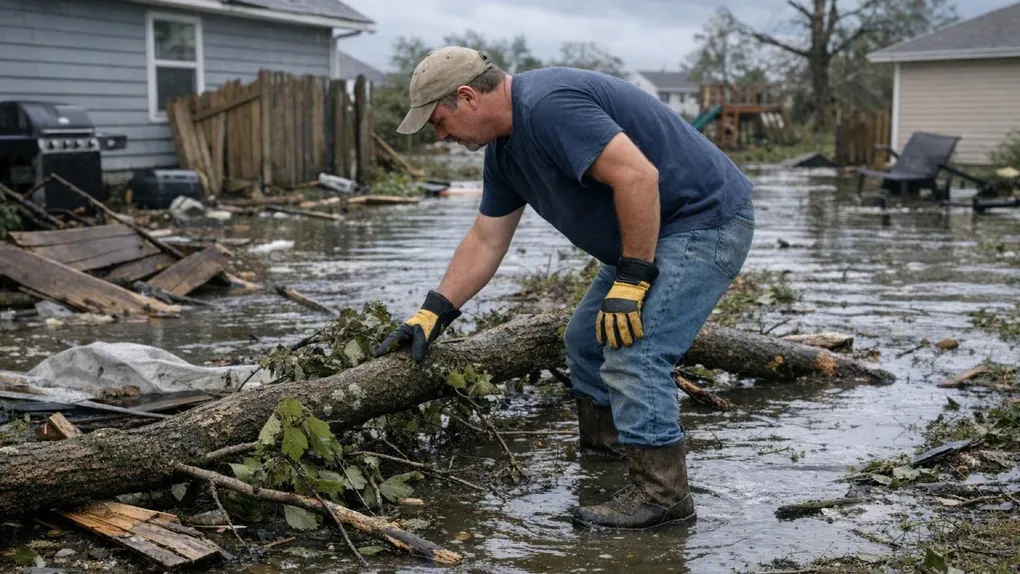
Prepping for a hurricane (Part 7): The aftermath
The most dangerous hours of the hurricane, statistically, happen after the storm ends, when the rain stops, the sun comes out, and everybody walks outside to look at the mess. That is when the carbon monoxide deaths happen. The downed power lines do not care that the storm passed. The widow-makers do not know it is over. This is Part 7 of the hurricane series: the aftermath, the phase where the wind is gone but the emergency is not.
Disclaimer: The information provided in this article is for general informational and educational purposes only. It is not intended as, and should not be considered, professional or emergency-response advice. Always follow the instructions of local authorities and professionals.
The Readiness Audit
Do you know the two things that kill after the storm?
- Green: Your generator runs 20 feet from the house with a battery-operated CO detector inside, and you stay away from downed lines.
- Yellow: You might run the generator on the porch “just for a minute” and will be careful around wires.
- Red: You have no plan for mold, downed lines, or chainsaw safety.
If you are Yellow or Red, read Phase 1 immediately.
Phase 1: The Silent Killers (CO and Electricity)
Goal: Do not die in the calm.
Carbon Monoxide (The #1 Post-Storm Killer)
- The rule: never run a generator indoors, in a garage, on a porch, or near a window.
- The distance: 20 feet away from the house, exhaust pointing away.
- The symptoms: headache, nausea, dizziness. If anyone feels these, get out of the house immediately and get fresh air.
The Electrical Enemy (Backfeeding and Downed Lines)
- Downed lines are live: treat every wire on the ground as energized. Never touch or drive over them. Water conducts electricity, so puddles near lines are electrified. Beware of metal fences.
- Backfeeding: if you plug a generator into a wall outlet, it can send power back through the grid and electrocute a lineman working on a repair miles away. Never do this. If you want backup power, have an electrician install a transfer switch.
The Takeaway: The aftermath killers are invisible: a gas you cannot smell and a wire that looks dead. Distance and the transfer switch are the only defenses.
Phase 2: The Cleanup (Chainsaws and Wildlife)
Goal: Clear the property without losing a limb.
Chainsaw Safety
- The threat: the “Barber Chair,” the moment a cut trunk splits upward and pinches the bar or kicks back at you.
- The protocol: read tension and compression in the wood before cutting. Use proper PPE (chaps, helmet, gloves). Never cut anything above shoulder height.
Wildlife Displacement
- The fact: snakes, rats, and fire ants get displaced by floodwater and seek high ground, which is your house.
- The protocol: probe debris piles with a stick before reaching in. Wear gloves and boots. Shake out shoes before putting them on.
Heat Exhaustion
- The threat: no AC plus manual labor equals heat casualties.
- The protocol: work in the early morning. Hydrate. Rest in the shade.
The Takeaway: Cleanup injuries are routine-work injuries amplified: wood that kicks, animals that moved in, and heat with no AC to retreat to.
Phase 3: The House (Muck Out and Mold)
Goal: Dry the structure before the mold clock expires.
The Mold Clock (24 to 48 Hours)
- The fact: mold begins growing within 24 to 48 hours of water contact.
- The muck out: remove soaked carpets, cut out wet drywall at least 2 feet above the water line, and pull out soaked insulation.
- Ventilate: get air moving through the wall cavities with fans.
Documenting the Loss
- The action: video everything before you move anything. Walk through each room and narrate the damage for the insurance claim.
- The swatches: pull carpet and wallpaper swatches for the adjuster to verify matching materials.
The Takeaway: The mold clock starts when the water arrives, not when you notice it. Cut, pull, and ventilate inside 48 hours, and film the mess before it leaves the house.
The Essential Kit Checklist
- The respirator: N95 masks for dust and mold spores.
- The gloves: heavy-duty work gloves.
- The boots: waterproof, puncture-resistant boots.
- The detector: battery CO detector (non-negotiable with a generator).
- The camera: phone or camera for the insurance video walk-through.
- The cord: outdoor-rated extension cords (indoor cords melt).
- The aid: stocked first aid kit.
Scenario Planner (Contingencies)
“A tree is leaning on my neighbor’s house.” The trap: cutting it yourself to be helpful. The fix: the exclusion zone. Never cut a leaning tree (a “widow-maker”). It is under tension and will snap or roll when cut. Call professionals.
“Someone feels dizzy near the generator.” The trap: thinking it is just fatigue. The fix: the CO protocol. Dizziness, headache, and nausea are CO symptoms. Get everyone into fresh air immediately and call emergency services.
Next Steps
- Buy the CO detector today if you own a generator. It is the single device that closes the gap that kills the most post-storm households.
- Practice the 20-foot rule physically. Place the generator where it will run and look at the distance from the house, then tell everyone in the family why it sits there.
- Read the Hurricane Survival Manual: The Checklist next, the one-page working document that compresses all seven parts into a printable season checklist.
Originally adapted from public FEMA and CDC post-hurricane safety guidance (public domain).