Prepping for a blizzard (Part 6): Snow and roof hazards
The neighbor who collapsed in his driveway was sixty-two, fit, and had shoveled his own snow for thirty winters. This time the snow was heavy and wet, the air was bitter, and twenty minutes in, he dropped the shovel and sat down on the ice thinking it was indigestion. His wife’s insistence on calling 911 is the only reason the story ends where it does. The blizzard was over. It had simply saved its most dangerous move for the cleanup.
The blizzard has passed, the sun is out, and the world is quiet. It looks beautiful, but this is often the deadliest phase of the storm. Emergency rooms see a massive spike in cardiac arrests and orthopedic injuries the day after a major snowfall. Heavy, wet snow combined with cold air creates a perfect storm for your cardiovascular system, shoveling puts a strain on the heart comparable to running a full sprint on a treadmill.
By treating the cleanup as a tactical operation rather than a chore, you protect your heart, your back, and your home. Using the right tools and the right mechanics ensures you live to enjoy the winter wonderland. This is Part 6 of the blizzard series.
Disclaimer: The information provided in this article is for general informational and educational purposes only. It is not intended as, and should not be considered, medical or professional advice. If you have heart conditions, consult your doctor before shoveling.
The Readiness Audit
Is your cleanup plan safe for your heart and your roof?
- Green: You own an ergonomic shovel and roof rake, know the 15/15 rule, and have aspirin in the house.
- Yellow: You have a shovel but plan to just push through the whole driveway.
- Red: You plan to climb a ladder or chip ice dams with an axe.
If you are Yellow or Red, read Phase 1 immediately.
Phase 1: The “Heart Attack Snow” Protocol
Goal: Clear the walk without clearing your arteries.
The physiology of the threat: cold air causes your blood vessels to constrict, raising your blood pressure, lifting heavy wet snow raises your heart rate rapidly. High pressure plus high heart rate plus constricted vessels equals rupture (heart attack).
The safe shoveling rules:
- Warm up first: do not roll out of bed and go outside. Walk around the house, stretch, and get the blood flowing before the cold hits you.
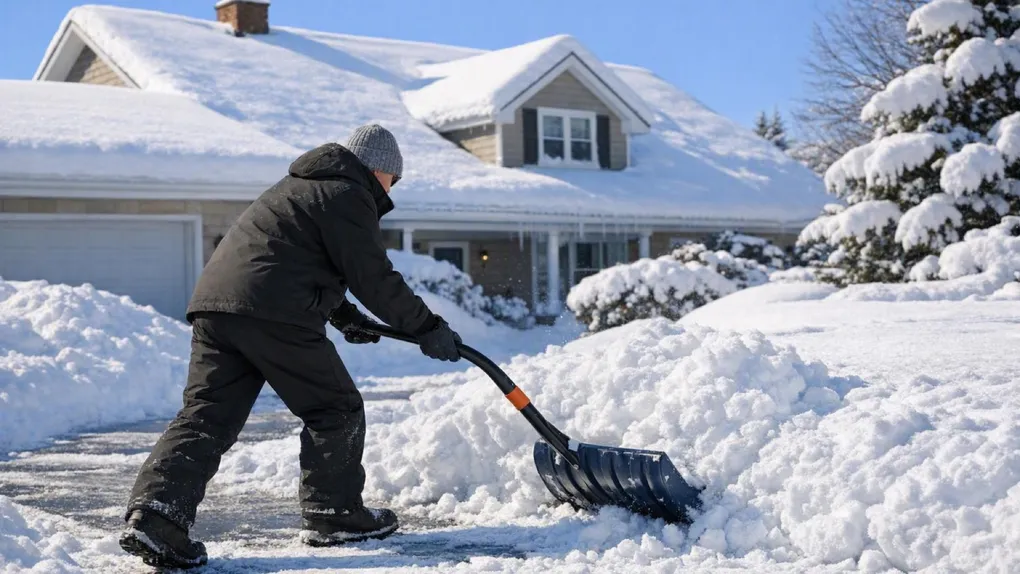
- Push, don’t lift: use the shovel like a plow and push the snow to the side. If you must lift, lift small scoops.
- The “15/15” rule: work for 15 minutes, rest for 15 minutes, and rehydrate during the break.
- The stop sign: if you feel tightness in the chest, nausea, shortness of breath, or pain in the left arm or jaw, stop immediately and call 911. Do not try to “finish the driveway.”
The Takeaway: The driveway is a treadmill running a sprint, so warm up, push instead of lift, and treat the stop sign as a hard wall.
Phase 2: Structural Integrity (The Roof)
Goal: Get weight off the roof without getting on the roof.
- The collapse hazard: watch for interior doors that stick or will not close, cracks appearing in drywall, or audible creaking and popping. If you see these signs, evacuate the house and call a structural engineer, do not go up on the roof to investigate.
- The roof rake strategy: climbing a ladder in icy conditions is a fast way to the ER. Use a telescoping roof rake to pull snow off the roof while standing safely on the ground. You do not need to clear the whole roof, clearing the bottom 2 to 3 feet (the eaves) relieves significant weight and helps prevent ice dams.
- Ice dams: ice ridges at the roof edge trap melting water, forcing it to back up under shingles and leak into your house. The fix: the pantyhose hack, fill the leg of a pair of pantyhose with calcium chloride (ice melt), tie it off, and toss it onto the roof perpendicular to the ice dam. It melts a channel through the ice so water can drain. Do not hack at the ice with an axe, you will destroy your roof.
The Takeaway: The roof is managed from the ground with a rake and a pantyhose tube of calcium chloride, and every ladder or axe is a second emergency being scheduled.
Phase 3: The Ventilation Check
Goal: Un-bury the machines that keep you alive.
Drifting snow can bury the intake and exhaust pipes for your high-efficiency furnace, dryer, or water heater (usually located low on the side of the house). If these block, exhaust gas backs up into the house. Before you shovel the driveway, shovel out these pipes and ensure they are clear of snow and ice.
The Takeaway: Two feet of plastic pipe on the side of the house outranks the driveway, because a buried vent carbon-monoxides the house before breakfast.
The Essential Kit Checklist
- The tool: an ergonomic shovel (curved handle reduces back strain).
- The reach: a telescoping roof rake (20+ ft reach).
- The melt: calcium chloride ice melt (safer for concrete and roofs than rock salt).
- The aid: baby aspirin kept in your pocket in case of chest pain symptoms.
- The boots: cleats or “Yaktrax” for boots to prevent slipping on ice.
Scenario Planner (Contingencies)
“I’m alone and I have chest pain.” The trap: denial, “it’s just indigestion.” The fix: assume the worst. Unlock your front door so EMS can get in, call 911, chew one adult aspirin (325 mg) or four baby aspirin, and sit down by the door to wait.
“The roof is leaking water inside.” The trap: ignoring it until spring. The fix: containment, if water is entering, poke a small hole in the center of the bulge in the ceiling to let it drain into a bucket, preventing the ceiling from collapsing under the weight. Then deploy the pantyhose hack on the roof to stop the backup.
Next Steps
- Buy the ergonomic shovel and roof rake before the next storm, because the cleanup tools only work if they were on the shelf before the snow.
- Put aspirin where you will shovel: pocket, glove, or porch shelf, since the stop-sign symptoms do not schedule themselves.
- Read the Blizzard Survival Checklist next, the one-page working document that compresses all six parts into a printable season protocol.
Originally adapted from public NWS and cardiac-safety winter guidance (public domain).