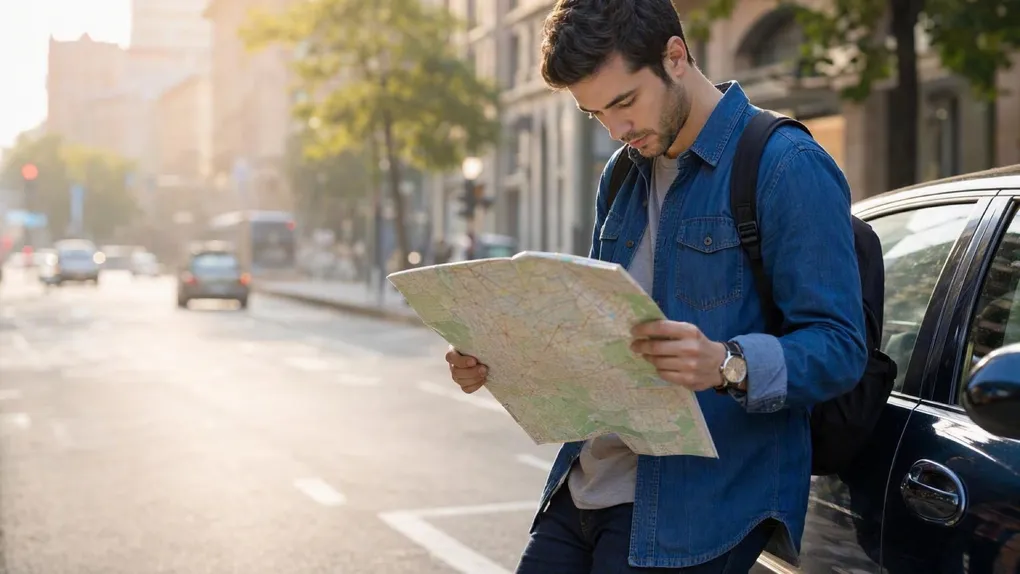
Prepping your family and household (Part 2): The commuter emergency plan
The accountant whose office sat exactly fifteen miles from her house had never walked the route home, because for eleven years she had never needed to. Then the river took the highway. Her phone had 12 percent, the GPS app spun on a dead network, and the last thing she remembered from her commute assumptions was “I know the way.” She got home that night because she remembered a train line from college and a coworker who lived near her. She wrote the plan the next morning on printer paper, and it now lives in her wallet with a train schedule taped to it.
You spend a large part of your life traveling between home, work, and the places you visit often. If a disaster strikes while you are away from home, your ability to get back safely depends on decisions you make now.
Caution: The “I know the way” assumption. Your normal route may be washed out, blocked by debris, or frozen in gridlock. The commuters who get home are the ones who mapped alternative routes and backup transportation before the emergency. A commuter plan turns a stressful scramble into a rehearsed routine.
Disclaimer: The information provided in this article is for general informational and educational purposes only. It is not intended as, and should not be considered, professional or emergency-response advice. Always follow the instructions of local authorities.
The Readiness Audit
Do you know more than one way home?
- Green: You have a written commuter plan with two alternative routes and backup transportation, kept in your wallet.
- Yellow: You know your normal route but have never thought about alternatives.
- Red: You rely entirely on your phone’s GPS and have no paper backup.
If you are Yellow or Red, execute Phase 1 immediately.
Phase 1: Map Your Daily Route
Goal: Document your normal route in writing.
- The route: write down your daily route from home to work and back, including major roads and landmarks.
- The reason: when GPS fails or your phone dies, a written route is your fallback.
- The detail: note the distance and approximate travel time.
The Takeaway: Your normal route, written down, is the baseline of your plan.
Phase 2: Map Alternative Routes
Goal: Identify at least two backup routes.
- The logic: your primary route may be blocked. Alternatives give you options.
- The action: map two different ways to get to and from work, using different roads and directions.
- The note: avoid routes that share the same choke points as your primary route.
The Takeaway: Two alternative routes mean you are never trapped by a single blocked road.
Phase 3: Identify Backup Transportation
Goal: Know how you will travel if your car is unavailable.
- Public transit: record the mode, line, stop, and fare for buses, trains, and ferries.
- Other options: list local taxi companies, commuter rail, and bus lines with phone numbers.
- The rule: if you rely on a car, plan what you will do if it is damaged or you cannot drive.
The Takeaway: Backup transportation is your escape hatch when your primary way home fails.
Phase 4: Keep It Accessible
Goal: Make sure the plan is with you when you need it.
- Wallet copy: keep a printed copy of the plan in your wallet or another safe place.
- Digital copy: store a copy on your phone, but do not rely on it alone.
- The rule: a plan you cannot reach during a disaster is useless.
The Takeaway: Keep the plan where you can always access it.
The Essential Kit Checklist
- Daily route: write down your normal route to and from work.
- Alternative routes: map at least two backup routes.
- Public transit: record modes, lines, stops, and fares.
- Backup transportation: list taxi, rail, and bus contact numbers.
- Wallet copy: print the plan and keep it in your wallet.
Scenario Planner (Contingencies)
“I work from home, so I do not need a commuter plan.” The trap: assuming you will always be home. The fix: you still travel for errands, appointments, and family. A commuter plan covers every place you visit often, not just work.
“My phone’s GPS will get me home.” The trap: relying on a device that can die or lose signal. The fix: GPS needs power and a network. A paper plan works when both are gone.
Next Steps
- Write down your two alternative routes this week and drive one of them at least once, because a route you have never traveled is not a route, it is a hope.
- Look up the transit lines and save the numbers for taxi, rail, and bus in your wallet copy.
- Read Part 3: Safeguard your critical documents next, to protect the records you will need to recover.
Originally adapted from public FEMA guidance (public domain).