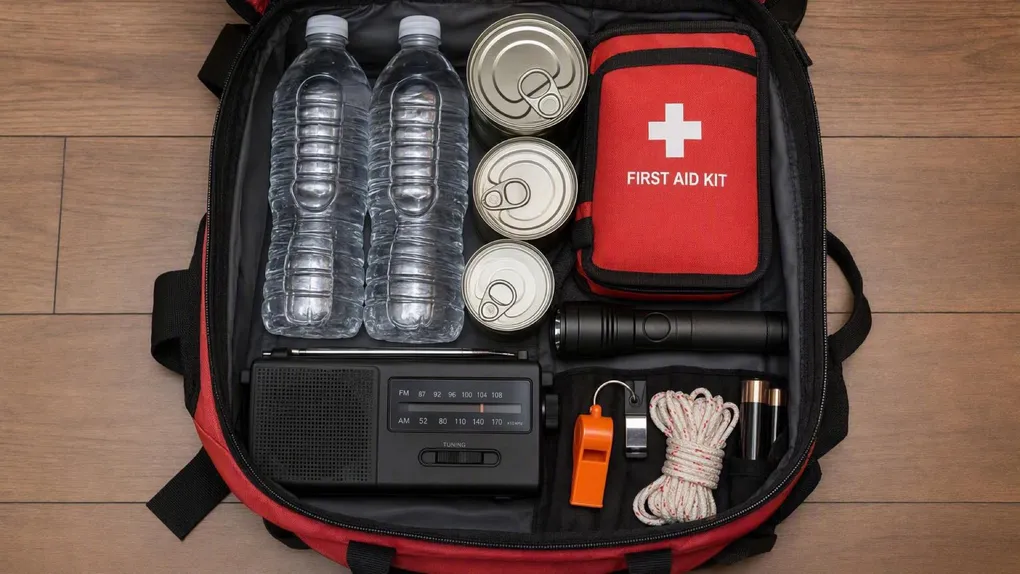
Prepping for anything (Part 3): Build your emergency supply kit
The couple who evacuated ahead of the hurricane spent four days in a hotel, and the kit they had built five years earlier paid for itself before lunch on day one. Cash for the gas station whose card readers were down. Bottled water for the toddler whose sippy cups were under the flood line. A hand-crank radio for the nights the local towers went quiet. Their neighbors, good people, spent the same four days burning money and time trying to buy those same things from empty shelves. The kit had not felt urgent in year five. It felt priceless in hour one.
A kit is your insurance against the first 72 hours, the window when stores are closed, roads are blocked, and help is stretched thin across your entire community. It is the difference between riding out a disaster and being a victim of it.
Caution: A kit in the garage is a kit you can’t reach. You do not know where you will be when an emergency happens. Store supplies at home, at work, and in your vehicle, and refresh them every six months. A kit that expired three years ago is a false sense of security. This is Part 3 of the “Prepping for anything” series.
Disclaimer: The information provided in this article is for general informational and educational purposes only. It is not intended as, and should not be considered, professional or emergency-response advice. Always follow the instructions of local authorities during an active event.
The Readiness Audit
Do you have a stocked, current emergency kit?
- Green: You have a full home kit plus smaller kits at work and in your vehicle, and you refresh them every six months.
- Yellow: You have some supplies, but they are scattered, expired, or only in one location.
- Red: You have no kit, and you would be relying on stores and neighbors in an emergency.
If you are Yellow or Red, execute Phase 1 immediately.
Phase 1: The Basic Kit (The Essentials)
Goal: Assemble the core items every kit needs.
- Water: one gallon per person, per day. Depending on where you live, keep 3, 7, or even 14 days on hand.
- Food: non-perishable food, cans and dry goods, enough for your family to survive a major disaster.
- Cash: enough cash to buy food, fuel, and a few nights in a hotel if you need to evacuate.
- Radio: a battery-powered or hand-crank radio that can receive NOAA Weather Radio tone alerts, with extra batteries.
- Light: a flashlight with extra batteries.
- First aid: a first aid kit.
- Signal: a whistle to signal for help.
- Air: N95 respirator masks, plus plastic sheeting and duct tape to shelter in place.
- Utilities: a non-sparking wrench or pliers to turn off utilities.
- Tools: a can opener and other food preparation tools.
- Maps: local maps.
The Takeaway: These ten items are the floor, not the ceiling. Start here, then customize.
Phase 2: The Custom Additions
Goal: Tailor the kit to your family’s unique needs.
- Medical: prescription medications and glasses.
- Children: infant formula and diapers.
- Pets: pet food and extra water for your pet.
- Documents: important family documents in a portable waterproof container.
- Warmth: a sleeping bag or warm blanket for each person, plus a complete change of clothing.
- Sanitation: moist towelettes, garbage bags, plastic ties, feminine hygiene products, and hand sanitizer (at least 60% alcohol).
- Tools: a fire extinguisher, matches in a waterproof container, and a water purification system.
- Comfort: books, games, and puzzles for children and adults.
The Takeaway: The basic kit keeps you alive, the additions keep you functional and sane.
Phase 3: The Three Locations
Goal: Cover yourself wherever you are.
- Home: keep a full kit in a designated place, ready to grab if you must leave quickly. Make sure everyone knows where it is.
- Work: be prepared to shelter at work for at least 24 hours, food, water, comfortable walking shoes, and medications.
- Vehicle: keep a smaller kit in your car in case you become stranded.
The Takeaway: One kit in one place is not enough. You do not get to choose where the disaster finds you.
Phase 4: The Six-Month Refresh
Goal: Keep the kit current and safe.
- Rotate: use foods before they go bad and replace them with fresh supplies. Place new items at the back, older ones in front.
- Inspect: throw out any canned good that is expired, swollen, dented, or corroded.
- Store: keep items in airtight plastic bags, and put the whole kit in one or two easy-to-carry containers, a trash can, camping backpack, or duffel bag.
- Water: store commercially bottled water, not tap water.
The Takeaway: A kit is a living thing. Refresh it every six months, or it quietly becomes useless.
The Essential Kit Checklist
- Water: one gallon per person per day, three days minimum.
- Food: non-perishable, enough for several days.
- Radio + flashlight: with extra batteries.
- First aid + whistle + N95 masks.
- Cash + documents + local maps.
- Home, work, and vehicle kits.
Scenario Planner (Contingencies)
“I’ll just buy supplies when the storm is coming.” The trap: everyone else has the same idea. The fix: by the time a warning is issued, store shelves are already empty. A kit is built in calm weather, not in the panic before the storm.
“My kit is from a few years ago, it’s probably fine.” The trap: expired food and dead batteries. The fix: set a recurring calendar reminder every six months to rotate food, replace batteries, and update the kit as your family’s needs change.
Next Steps
- Build the home kit this weekend. One gallon per person per day, three days of food, cash, light, radio. One bin, one afternoon, and the 72-hour window is covered.
- Set the six-month refresh reminder on a calendar that will actually be checked, and tape the date inside the bin lid.
- Read Part 4: Take action next, because supplies cover the first days, and insurance, documentation, and mitigation cover the years after.
Adapted from FEMA Ready.gov “Are You Ready?” (public domain).