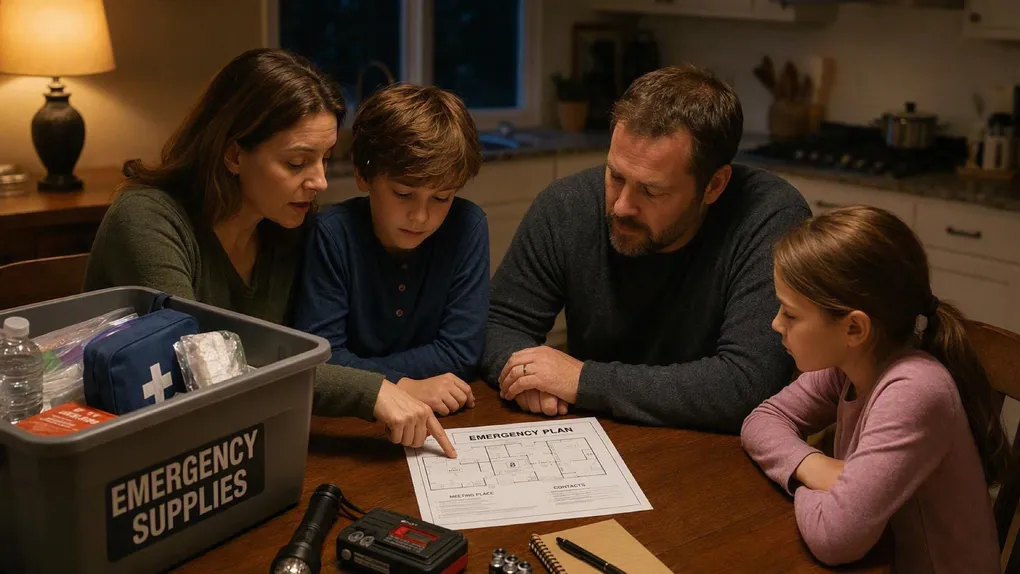
Are You Ready? A Citizen Preparedness Overview
The box arrived on a Tuesday. That is how FEMA’s 30-page citizen guide opens its case, in effect: not with sirens, but with the quiet admission that every U.S. state and territory has been hit before and will be hit again. This post distills the whole framework so you can act on it in an afternoon, then points you to the deep-dive series we have already published on each specific hazard.
Here is the frame the guide hangs everything on. Disasters disrupt thousands of lives every year, and after one hits, local first responders may not be able to reach you right away. You and your family can take simple steps now to take back control in the uncertainty of a disaster. People and families that plan for emergencies help keep people safe, limit property damage, better manage their savings, support community preparedness, and help their community get back up and running after a disaster.
Disclaimer: The information provided in this article is for general informational and educational purposes only. It is not intended as, and should not be considered, legal, medical, or financial advice. Always follow the instructions of local authorities and emergency management officials.
The Readiness Audit
Are you ready for the disaster your region keeps telling you about?
- Green: You know your local hazards, you have a practiced family plan, and your supply kit was checked in the last six months.
- Yellow: You have some supplies scattered around, but no written plan and no practice runs.
- Red: You have done none of this and you are counting on luck.
If you are Yellow or Red, execute Phase 1 immediately.
Phase 1: The Three-Step Framework
Goal: Understand FEMA’s whole model in one page.
The guide breaks citizen preparedness into three moves. First, know your risks: learn which hazards are prevalent in your community from your state and local emergency management websites, sign up for community alert systems, and talk to friends and neighbors about what they prepare for. Second, make a plan: a communications plan, evacuation and shelter plans, customized supplies for your family’s unique needs, and secured critical documents. Third, take action: get the insurance you need, document your property, protect your home against damage, practice your plans, and find ways to serve your community.
The Takeaway: Know, plan, act. The order matters, because a plan built on guessed risks collapses in the first real storm, and action without a plan is just spending.
Phase 2: Why Preparation Pays
Goal: Understand what planning actually buys.
The guide lists the benefits of planning ahead, and they compound. Planning keeps people safe and limits property damage. It helps families better manage their savings, because disaster costs less when you are not buying everything at panic prices the night before. Planning also lets you support community preparedness, since a prepared household stops being a victim that needs rescue and starts being an asset that can help neighbors.
The Takeaway: Preparation is not a bunker fantasy. It is the difference between being a liability in your own neighborhood and being the reason someone else gets through the week.
Phase 3: How This Series Fits the Rest of This Site
Goal: Know where to go deep.
FEMA’s guide is a framework. This site has whole series that go deep on individual hazards and skills, and the framework points at them rather than repeating them. The next post in this series covers determining your risks and the protective actions that apply to every disaster. After that comes a post that compresses the guide’s quick-reference protective actions for 17 specific hazards, with links to our full series on flood, tornado, hurricane, wildfire, earthquake, heatwave, blizzard, tsunami, volcanic eruption, and landslide. Then three posts on making the plan (communication), gathering supplies and documents, taking action (alerts, insurance, property protection), and recovering the right way after the event.
The Takeaway: Use the framework here to organize, then use the hazard series on this site to execute. The guide itself says it best: simple steps now take back control later.
The Essential Kit Checklist
- The Risk Check: Your state and local emergency management websites bookmarked, and your community alert systems subscribed.
- The Plan: A written family communication plan with an out-of-state contact, carried by everyone.
- The Kit: Emergency supplies stored at home, office, and vehicle, checked every six months.
- The Documents: Critical records copied and stored in a fire- and waterproof box plus encrypted digital copies.
- The Practice: A household drill scheduled, because an unpracticed plan is a wish.
Scenario Planner (Contingencies)
“We already survived one disaster, so we know what we are doing.” The trap: a single experience teaches you one disaster, not disasters in general. The fix: run the full framework anyway. Know your risks in writing, plan for communication and evacuation separately, and practice. The guide’s line is blunt: not if, but when.
“We plan, but we never practice.” The trap: plans that exist only on paper fail at the moment of panic. The fix: the guide says to practice your plan just like a fire drill, with regular household meetings to review the communication plan and meeting places. Schedule the first one now.
Next Steps
- Re-run the Readiness Audit. Scroll back to the top, answer the three questions honestly, and close whichever gap they reveal before you close this tab.
- Print the checklist. The kit list above only works if it exists when the power is out, so paper beats apps here.
- Fold it into the family plan. A prepared household beats prepared person, so put these steps in front of everyone who shares your roof.
Next: Read Know Your Risks Before the Storm Does to determine which hazards actually threaten your household.
Adapted from Federal Emergency Management Agency - Are You Ready? An In-Depth Guide to Citizen Preparedness (public domain). Read the original: Are You Ready? An In-Depth Guide to Citizen Preparedness.