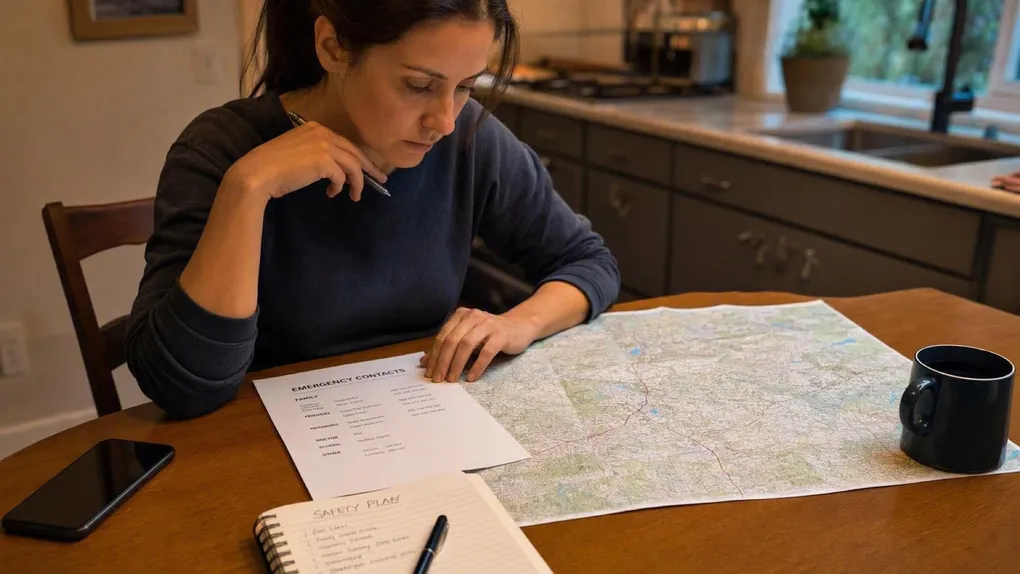
Prepping for a lost person checklist
In a crisis, your IQ drops. You will not remember the “10 steps” you read once. Hesitation costs time, and when a child or vulnerable adult is missing, hesitation is the most expensive thing on the table. A checklist bridges the gap between panic and action, telling you exactly what to do next so you don’t have to think. This manual is your external brain. By following it, you ensure no stone is left unturned and every resource is deployed instantly.
Next Steps
- Re-run the Readiness Audit. Scroll back to the top, answer the three questions honestly, and close whichever gap they reveal before you close this tab.
- Print the checklist. The kit list above only works if it exists when the power is out, so paper beats apps here.
- Fold it into the family plan. A prepared household beats prepared person, so put these steps in front of everyone who shares your roof.
Disclaimer: The information provided in this article is for general informational and educational purposes only. It is not intended as, and should not be considered, legal or emergency-response advice. Always call 911 first in a missing-person emergency.
Mission 1: Proactive preparedness (do this today)
Identification and tracking
- For a child: equip with wearable ID (shoe tag, laminated card).
- For an elderly loved one: equip with a MedicAlert bracelet and iron-on clothing labels.
- Implement tracking:
- Bluetooth (AirTag) for close-range crowds.
- GPS tracker (AngelSense) for high-risk wandering.
- Location sharing enabled on smartphones.
Create a “go-kit”
- Digital profile: save a clear headshot plus full-body photo plus medical info on your phone.
- Physical contact list: printed numbers for local police and support network.
Education and environment
- Practice drills (kids): “freeze and find” and “safe stranger.”
- Secure home (elderly): install door chimes and high locks.
- Community net: distribute “neighbor cards” with photo and contact info.
Mission 2: Immediate action (the moment they are missing)
The first 15 minutes
- STOP: breathe, think, observe, plan.
- If at home: search top-to-bottom. Check closets, under beds, and hazards (pools) first.
- If in public: stay put. Yell name. Alert security for a “Code Adam.”
The first hour
- Call 911 immediately, no waiting period.
- Provide intel: name, description, clothing, medical/behavioral risks.
- Share photo: state “I have a photo ready to share.”
- Deploy support: call a Tier 1 contact to come assist.
The ongoing search
- Establish home base: one person stays at the “last seen” spot or at home.
- Digital blast: post a “MISSING” alert to local groups with a “call 911” instruction.
- Coordinate: give the photo to police and follow the lead detective’s instructions.
Expanding the net
- Call hospitals: check ERs for “John/Jane Doe.”
- Check transit: contact transit police.
- Check history: volunteers search old homes or workplaces (dementia) or friends’ houses (kids).
Scenario planner (contingencies)
“I don’t have a current photo.” The trap: the only photos you have are from last year or have filters and masks. The fix: the birthday rule. Every birthday (or every 6 months for seniors), take a clear, plain-background headshot specifically for safety purposes.
“My neighbors aren’t home to help search.” The trap: relying on a small circle. The fix: social media velocity. This is why the “digital blast” is critical. It mobilizes the wider community instantly when your immediate circle is unavailable.