Prepping for a flood (Part 7): Safe re-entry
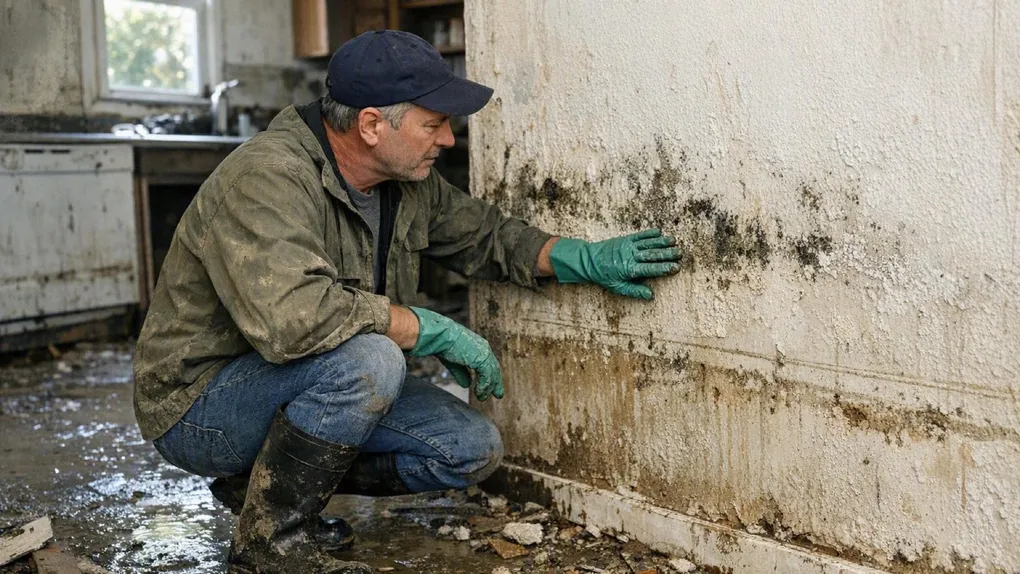
The floodwaters have receded, but your home is now a biohazard zone. The silence is deceptive. Hidden dangers, from venomous snakes hiding in cupboards to invisible mold spores colonizing your walls, are active right now. My neighbor came back to his house three days after the water dropped, wearing sneakers, and carried out one cardboard box of soggy photo albums before his wife made him stop. By the weekend he had a cough he could not shake. By the following week, the wall behind his baseboard was growing a black fuzz he swore had not been there on Monday. He is not careless. Nobody had told him the two rules that change everything after a flood: the house you return to is a biohazard, and you are in a 48-hour race with mold that starts the moment the water recedes.
The silence after a flood is deceptive. Hidden dangers, from venomous snakes hiding in cupboards to invisible mold spores colonizing your walls, are active right now. Miss the drying window and the cost of remediation triples and the home becomes uninhabitable. This is the last part of the flood series: how to walk back into the disaster zone safely, strip it strategically, and document everything so the insurance company pays for the fight.
Disclaimer: The information provided in this article is for general informational and educational purposes only. It is not intended as, and should not be considered, professional, health, or insurance advice. Consult a structural engineer, mold remediation specialist, and your insurance adjuster for your specific situation.
The Readiness Audit
Are you equipped to enter the disaster zone?
- Green: You have N95 masks, heavy rubber boots, and a pry bar ready. You know exactly how high to cut the drywall.
- Yellow: You plan to go in wearing sneakers and just open the windows.
- Red: You already threw away the ruined carpet without taking a single photo of it.
If you are Yellow or Red, stop. Read Phase 1 before unlocking the door.
Phase 1: The Scout (Safety Inspection)
Goal: Ensure the house will not kill you when you walk in.
The Structural Check
- Look Up: Before entering, check the roofline. Is it sagging?
- Look Down: Is the foundation shifted?
- The Rule: If you see buckled walls or sagging ceilings, do not enter. Call a structural engineer.
The Utility Check
- The Sniff Test: If you smell rotten eggs (natural gas) or hear a hissing noise, leave immediately and call the fire department.
- The Spark: Do not turn on lights. If gas is trapped, a light switch spark can cause an explosion. Use a flashlight.
- The Breaker: Even if the power is out, turn off the main breaker. When the grid comes back on, you do not want it electrifying a wet house.
The Wildlife Sweep
- The Threat: Floodwaters displace animals. Snakes, rats, and fire ants seek high ground, which is often your kitchen cabinets or furniture.
- The Fix: Make noise. Use a stick to poke piles of debris before reaching in with your hands.
The Takeaway: The house spent days underwater and nobody was watching it. Treat the first entry like a reconnaissance mission, not a homecoming.
Phase 2: The Mold Clock (Mitigation)
Goal: Stop the biological attack. You have 48 hours to get the moisture out.
The Muck Out
- Carpet: It cannot be saved. Cut it into strips and drag it out. Remove the wet padding underneath (it is a sponge for sewage).
- Drywall: Water wicks up walls like a paper towel. You must cut the drywall 2 feet above the water line. This allows air to circulate into the wall cavity and dry the wooden studs. If you leave wet drywall, mold eats the paper backing and rots the studs.
- Insulation: Remove all wet fiberglass insulation. It effectively holds water forever.
Air Flow
- The Method: Open all doors and windows unless the outside humidity is extreme. Use fans to circulate air.
- Dehumidifiers: If you have power (generator), run dehumidifiers around the clock.
The Takeaway: The 48-hour clock is why the first day back is the most important day of the whole flood. Every hour of indecision is an hour of mold growth.
Phase 3: The Insurance Chain (Documentation)
Goal: Prove the loss.
Stop. Do Not Trash It Yet.
- The Trap: You want to throw the ruined sofa on the curb immediately.
- The Fix: Photograph the pile. You must take photos of every damaged item before it leaves your property. Create a loss pile in the yard and video it.
The Swatch Rule
- The Detail: Keep a small square (swatch) of the ruined carpet, the expensive wallpaper, or the custom curtains.
- The Reason: The adjuster needs to see the quality of the material to pay you the replacement value. A photo cannot prove it was high-end wool carpet. A swatch can.
The Takeaway: Every item leaves the property twice: once as a photograph, once as trash. Reverse that order and the claim pays.
The Essential Kit Checklist
- The PPE: N95 masks (mold spores), heavy rubber boots (snakes and nails), and thick work gloves.
- The Tools: A pry bar (for baseboards), a utility knife (for carpet and drywall), and heavy-duty trash bags.
- The Cleaning Agent: Bleach is okay for non-porous surfaces, but a specialized fungicide (like Concrobium) is better for studs and wood.
- The Camera: Dedicated smartphone or camera for evidence documentation.
Scenario Planner (Contingencies)
“I started cleaning and now I feel like I have the flu.” The trap: sick building syndrome. You inhaled mold spores or sewage bacteria. The fix: evacuate and medicate. Leave the house immediately, shower thoroughly, and if breathing is difficult, go to the ER. This is why N95 masks are mandatory, not optional.
“The adjuster says I threw away the evidence.” The trap: cleaning up too fast. The fix: the digital archive. Show them the timestamped video you took of the loss pile in the yard. If you kept the swatches from Phase 3, present them now.
Next Steps
- Build the re-entry bin before you need it. N95s, boots, pry bar, utility knife, fungicide. One bin, top shelf, because after a flood every store within 30 miles is sold out.
- Set the mold-clock rule with the family: whoever gets home first starts the muck-out, and nothing gets trashed before its photo.
- Read the Flood Preparedness Guide for the complete series overview, from mapping your risk to the day you walk back in.
Originally adapted from public FEMA and CDC flood recovery guidance (public domain).